Guide · 4 min read
How to stop cat litter tracking and keep litter from getting everywhere
You will not stop litter tracking completely, but you can cut it down to a few stray grains. Use a large box with high sides, fill it only an inch or two deep, put a big litter-trapping mat where your cat steps out, and do a thirty-second sweep every day. Change the litter itself only gradually, and only if your cat accepts it, because a cat who dislikes the litter may stop using the box, which is a far worse problem than grit underfoot.
Why litter ends up everywhere
Litter leaves the box in two ways. Some is kicked out during digging and covering, which is scatter. The rest rides out on paws and fur and drops off over the next few yards, which is tracking. Fine, light granules cling best. Long fur between the toes carries more. A small or overfilled box makes both worse. Each cause has its own fix, so notice which one you have: a spray of litter around the box, or a trail leading to your bed.
Start with the box: bigger, higher, less full
Most cats prefer a large box that is easy to get into. International Cat Care suggests one about one and a half times your cat’s length, and the ASPCA points out that a plastic storage container makes an excellent litter box. High sides keep the digging inside. Kittens, seniors and cats with stiff joints still need a low entry, so choose a box with a dip at the front, or cut one into a storage container and smooth the edge.
Then use less litter. The ASPCA recommends one to two inches rather than three or four. Deeper litter does not make a cleaner box. It makes a sandbox, and more of it goes over the side.
Put a litter-trapping mat at the exit
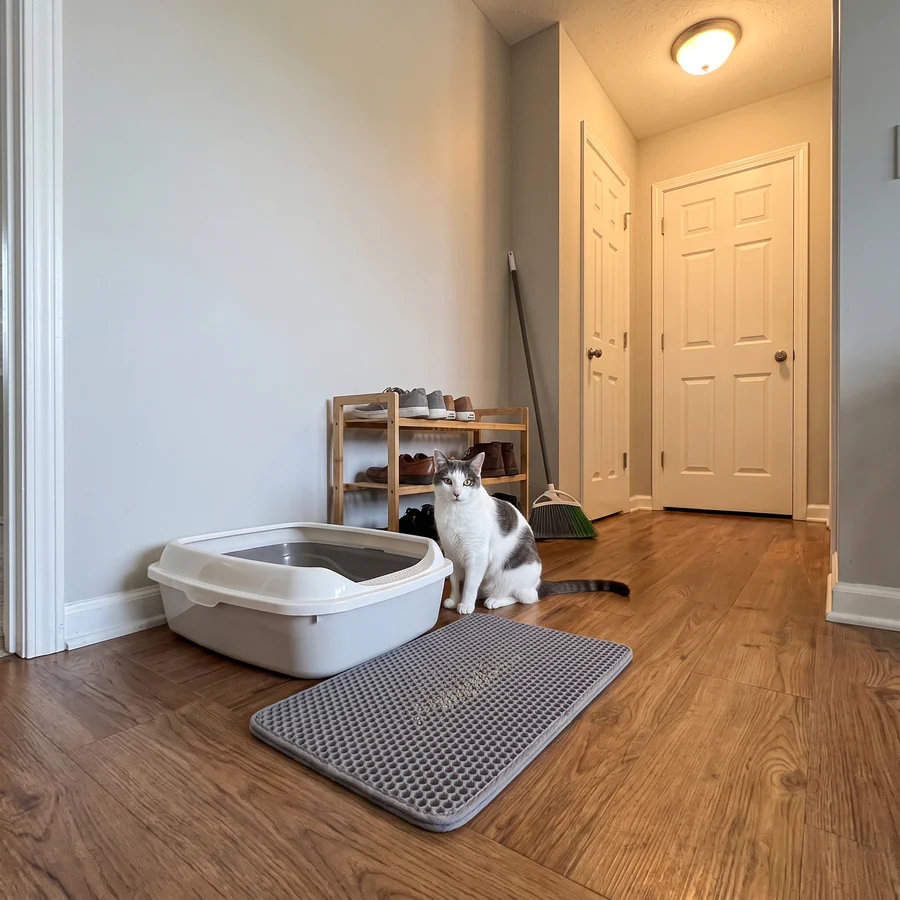
A mat works by getting litter off paws before they reach your floor, so size and position matter more than anything else. It should cover the spot where your cat actually steps out, and be big enough for a few steps. Put the box against a wall or in a corner so that the only way out is across the mat.
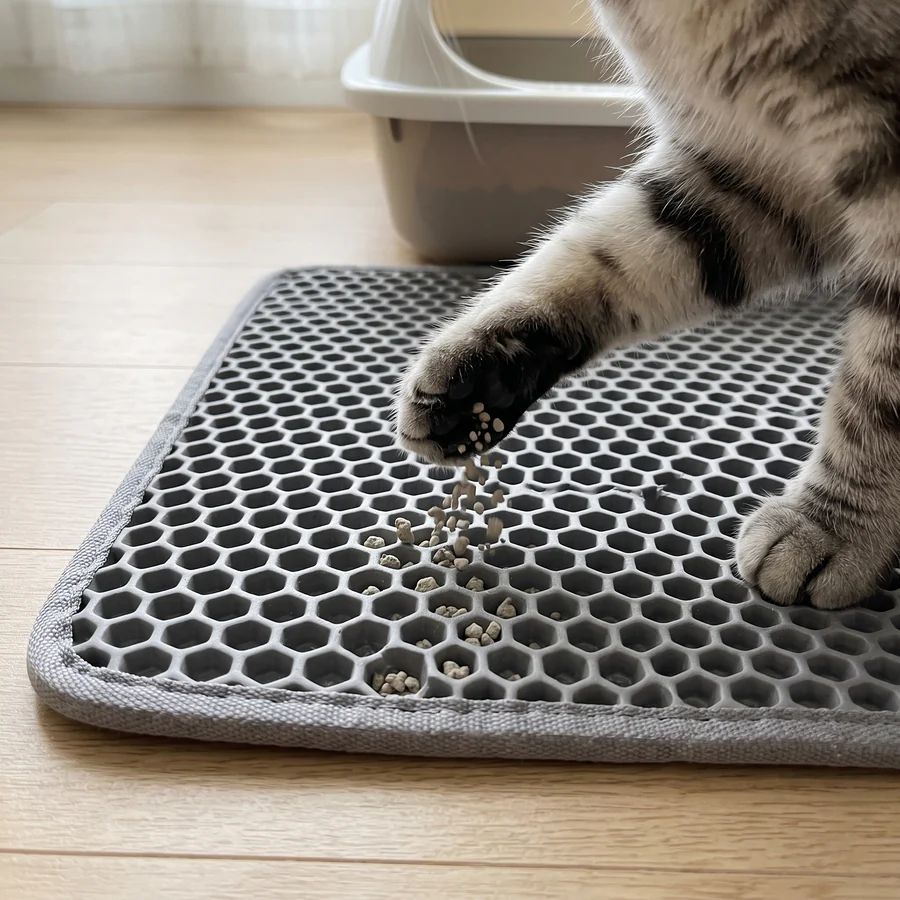
Double-layer mats do this best. Our cat litter trapping mat, The Landing Pad, has a honeycomb top layer that lets granules fall through, and a waterproof, non-slip base that holds them until you tip them back into the box or into the trash. It measures 24 by 15 inches and works with clumping, crystal and pellet litter. Two honest notes: no mat catches everything, and a cat who leaps clean over it has beaten the system. For now, this mat ships to US addresses only. It is covered by our 30-day returns.
Change the litter carefully, if at all
Larger, heavier granules and pellets track less than fine clay. The trouble is that cats get a vote. Both the ASPCA and International Cat Care note that most cats prefer fine, unscented litter with a sandy feel, and some find hard pellets uncomfortable under their paws.
If you want to try a lower-tracking litter, mix it into the old one gradually over a week or so, or set up a second box with the new litter beside the first and see which one your cat chooses. If they hesitate, perch on the edge or go elsewhere, switch back. Tracking is a housekeeping problem. Litter box avoidance is a real one.
Lids, top-entry boxes and other hardware
Covered and top-entry boxes do reduce scatter, and climbing out across a lid knocks litter off paws. They are not right for every cat. The ASPCA notes that most cats dislike lids and liners, and a top entry is a poor fit for kittens, older cats or any cat with sore joints. If you try one, keep the old box available for a while and let your cat decide.
When litter mess is a vet question
A cat who suddenly starts digging frantically, spending a long time in the box, going more often, crying, or leaving urine or stool outside the box needs a vet visit, not a new mat. Urinary problems in particular can become emergencies, especially if a cat strains and produces little or nothing. Never punish a cat for litter box accidents. It does not work, and it makes the box a scarier place.
Keep paws and floors tidy
With a healthy cat and a sensible box, small habits do the rest. If space is tight, our guide to keeping a cat happy in a small apartment covers where the box should go. And since you are cleaning up after them anyway, here is how to get cat hair off the couch.
- Long-haired cats carry litter in the fur between their toes. Ask your groomer or vet to show you how to keep those tufts trimmed safely.
- A box on hard flooring is far easier to clean around than one on carpet.
- Keep a dustpan or handheld vacuum next to the box. A daily thirty-second sweep stops litter from migrating.
- Scoop at least once a day. A clean box is one your cat keeps using.
- Tip the mat out every few days, before it fills.
Quick answers
Do litter mats really work?
Yes, within limits. A large mat placed right where your cat exits removes a good share of what is stuck to their paws, and double-layer designs hold it so that it does not spread. No mat catches everything, and a small mat that your cat steps over does almost nothing.
What type of cat litter tracks the least?
Larger, heavier granules and pellets track less than fine, light clay. Many cats prefer fine litter, though, so make any switch gradually and watch how your cat reacts. If they avoid the box, go back to what they liked.
How much litter should I put in the litter box?
The ASPCA recommends one to two inches. That is enough to dig and cover, and shallow enough that less gets kicked over the side. If your cat clearly prefers it a little deeper, adjust to them.
Does a top-entry litter box stop litter tracking?
It reduces it, because litter falls off as your cat climbs out across the lid. It does not suit kittens, seniors or cats with joint pain, and some cats simply refuse enclosed boxes. Offer it alongside the old box first.
Why is my cat suddenly kicking litter everywhere?
Check the simple things first: a box that is too small, too full or not clean enough. If the digging is new and comes with frequent trips, straining, crying or accidents outside the box, see your vet promptly, because those are signs of a medical problem.
General care advice, not veterinary advice. If your cat’s behaviour changes suddenly, or they stop eating, talk to your vet.