Guide · 4 min read
How to get cat hair off the couch, blankets and bed, fast
The fastest way to get cat hair off a couch is friction, not suction. Drag a damp rubber glove, a squeegee or a reusable pet hair roller across the fabric in short strokes so the hair clumps together, lift it off, then vacuum what is left with an upholstery attachment. For blankets and bedding, run them in the dryer on low or no heat for about ten minutes before washing, so the lint trap takes the hair. Brush your cat once or twice a week and there will be less to remove.
Why cat hair clings to fabric
Cat hair is fine and light, and it works its way into the weave of a fabric rather than lying on top of it. That is why a quick pass with a vacuum often glides over the top and leaves most of it behind. You need something that grips the hair and drags it sideways. Rubber and textured fabric do that well. Then the vacuum can finish the job.
How to get cat hair off a couch
Work from the top of the sofa down, one cushion at a time.
- Damp rubber glove: put on a dishwashing glove, dampen it slightly, press down and wipe in one direction. The hair rolls into clumps you can pick off.
- Squeegee: short, quick strokes across the fabric pull out hair that has worked in deep. It is good on flat, tightly woven upholstery and on rugs.
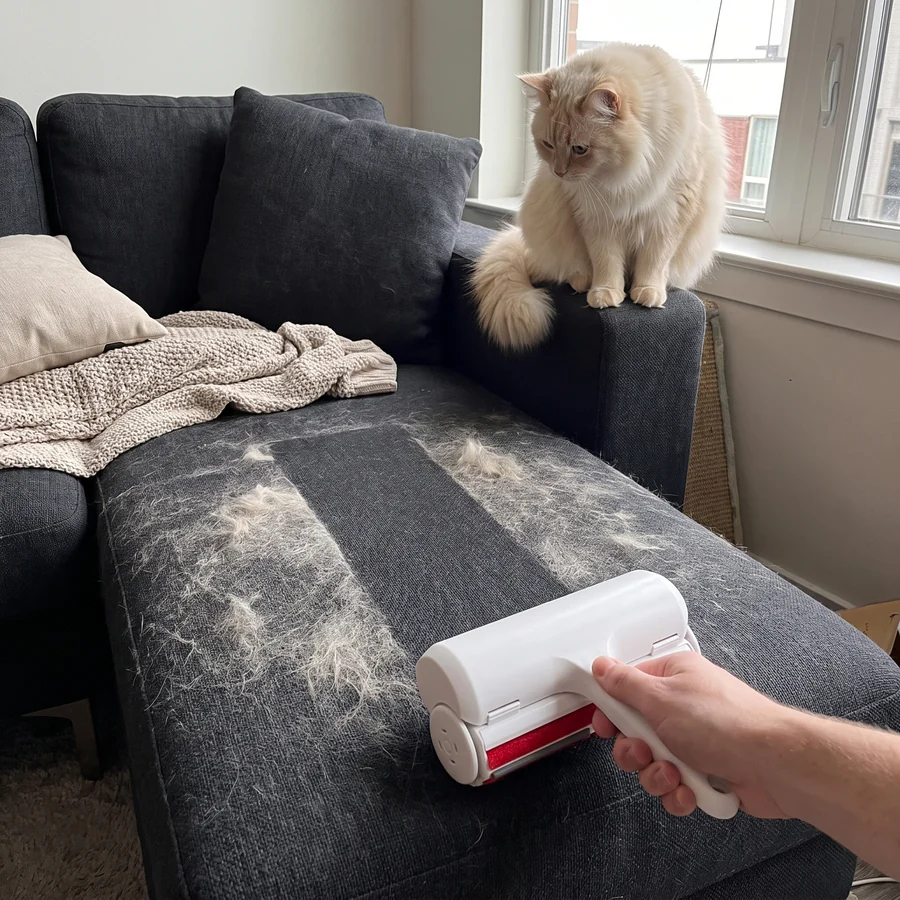
- Reusable roller: fast for daily upkeep, with nothing to peel or throw away. More on this below.
- Sticky lint roller: still the best tool for corners, piping and buttoned tufts where nothing else fits.
What a reusable pet hair roller does well, and what it does not
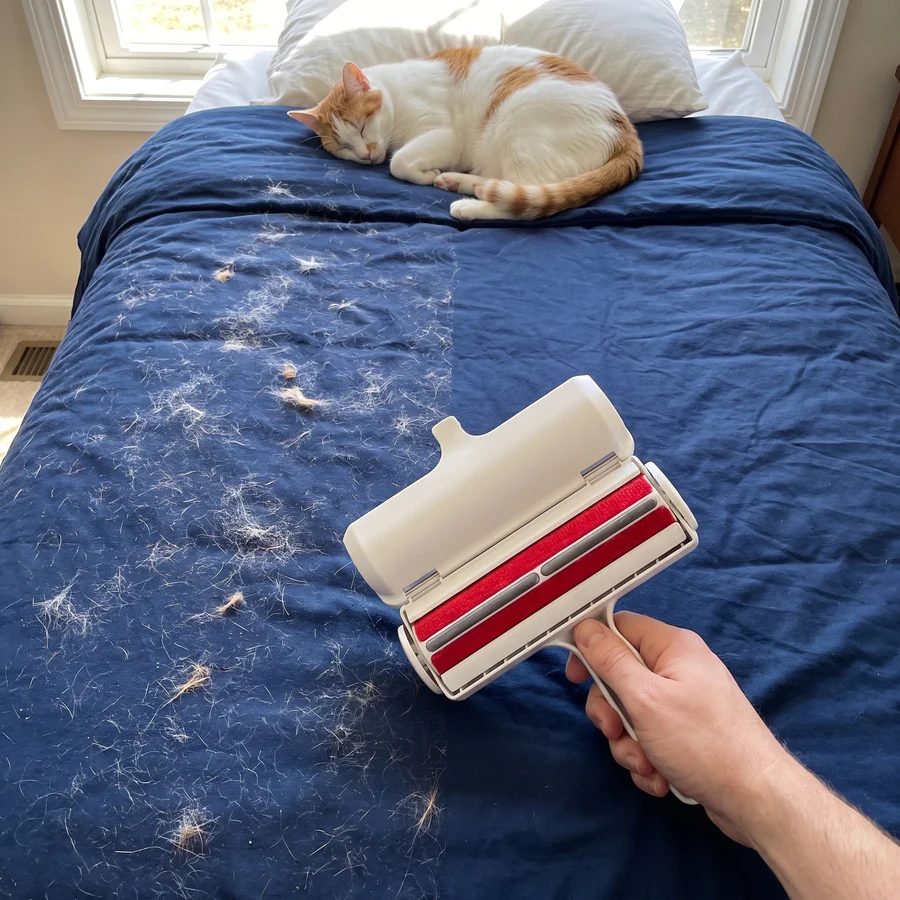
A reusable pet hair remover roller like The Clean Sweep has no sticky sheets and needs no refills. You roll it in short back-and-forth strokes, the hair lifts off the fabric, and the fur collects in a chamber that you open and empty into the trash.
It needs taut fabric with something firm underneath: sofa cushions, armchairs, mattresses and bedding pulled flat. It is not the tool for hard surfaces or leather, and it will not do much for the sweater you are currently wearing. Keep a sticky roller by the front door for that. It also comes in the Apartment Cat Kit, and it is covered by 30-day returns.
Then vacuum what is left
Once the hair is loosened and clumped, a vacuum with an upholstery attachment picks up the rest, along with the dander and dust you cannot see. Lift the cushions and do the crevices, where hair collects in drifts. Nothing replaces regular vacuuming. The friction tools just make it far more effective.
How to get cat hair off blankets and bedding
Washing a hairy blanket right away tends to turn loose hair into wet clumps that stick to the fabric and the drum. Do it the other way around, and check the care label first. For a comforter or mattress you cannot wash, go over the surface with the roller or a damp glove.
- Shake the blanket out, outdoors if you can.
- Tumble it in the dryer for about ten minutes on low or no heat, with a dryer sheet or dryer balls. The loosened hair ends up in the lint trap.
- Empty the lint trap, then wash as usual.
- Dry again, and empty the lint trap once more.
- If hair is left behind in the washer drum, wipe it out once the drum is dry.
Leather, wood and hard floors
Smooth surfaces are the easy part. Hair does not weave into leather or wood. It just sits there. A slightly damp microfiber cloth picks it up in one pass, and a vacuum or dust mop handles floors. Dry dusting mostly sends hair into the air so that it can land on the sofa again.
Shed less at the source
Every hair you brush out is one you do not have to remove from a cushion. The ASPCA suggests brushing once or twice a week for most cats, and long-haired cats need it every few days. Regular brushing also cuts down on hairballs. Indoor cats shed all year, so make it a routine rather than a spring event.
Then make the sofa easier to defend. Put a washable throw on the spot your cat always picks, and give them a bed of their own nearby, such as a cardboard scratcher lounge or one of our cat tunnels and caves. Keep the roller within reach of where you sit. Thirty seconds a day beats an hour on Sunday.
When shedding is a vet question
Normal shedding leaves hair on your furniture, not gaps in the coat. Bald patches, thinning fur, red or flaky skin, constant scratching, or a cat who licks one area over and over are reasons to see your vet, as the ASPCA advises. Allergies, fleas, skin infections and stress can all show up as hair loss, and no roller fixes those.
Quick answers
How do you get cat hair off a couch without a lint roller?
Use friction. A slightly damp rubber glove or a window squeegee dragged across the fabric in short strokes rolls the hair into clumps you can pick off. Follow with a vacuum upholstery attachment for anything left in the weave.
Do reusable pet hair rollers actually work?
On the right surface, yes. They work well on taut upholstery and bedding with short back-and-forth strokes, and they never need refills. They are weak on loose fabric, clothes you are wearing, leather and hard surfaces, where a sticky roller or a damp cloth does better.
How do I get cat hair off blankets in the washing machine?
Start with the dryer instead. Ten minutes on low or no heat with a dryer sheet or dryer balls loosens the hair and sends it to the lint trap. Then wash, dry again and clear the lint trap after each cycle.
How often should I brush my cat to reduce shedding?
Once or twice a week suits most cats, according to the ASPCA, and long-haired cats need brushing every few days. Keep sessions short and pleasant so that your cat does not learn to vanish when the brush appears.
Why is my cat shedding so much all of a sudden?
Some shedding all year is normal for indoor cats. A sudden increase together with bald spots, itching, scabs, a dull coat or over-grooming is different and should be checked by your vet.
General care advice, not veterinary advice. If your cat’s behaviour changes suddenly, or they stop eating, talk to your vet.