Guide · 4 min read
New kitten checklist: what a first-time cat owner actually needs
For day one you need less than the pet store suggests: the food your kitten already eats, shallow bowls, a litter box with unscented litter, a carrier, a sturdy scratcher, a bed or hiding box, a few safe toys and a vet appointment. Set it all up in one quiet room before they arrive, and let them explore the rest of your home over the following days. Everything else can wait until you know who you have adopted.
The new kitten checklist: day-one essentials
Have these ready before the carrier comes through the door.
- Food: the same food the shelter, breeder or foster home has been feeding. If you want to change it, Best Friends Animal Society suggests blending the new food in over about a week.
- Bowls: shallow and wide, in ceramic, glass or stainless steel. Put the water a little away from the food, which is how cats prefer it.
- Litter box and unscented litter: an open box with sides low enough for short legs. Ask what litter they are used to and start with that.
- Carrier: sturdy, with a top opening if you can. Left open in their room, it makes a good first hiding place.
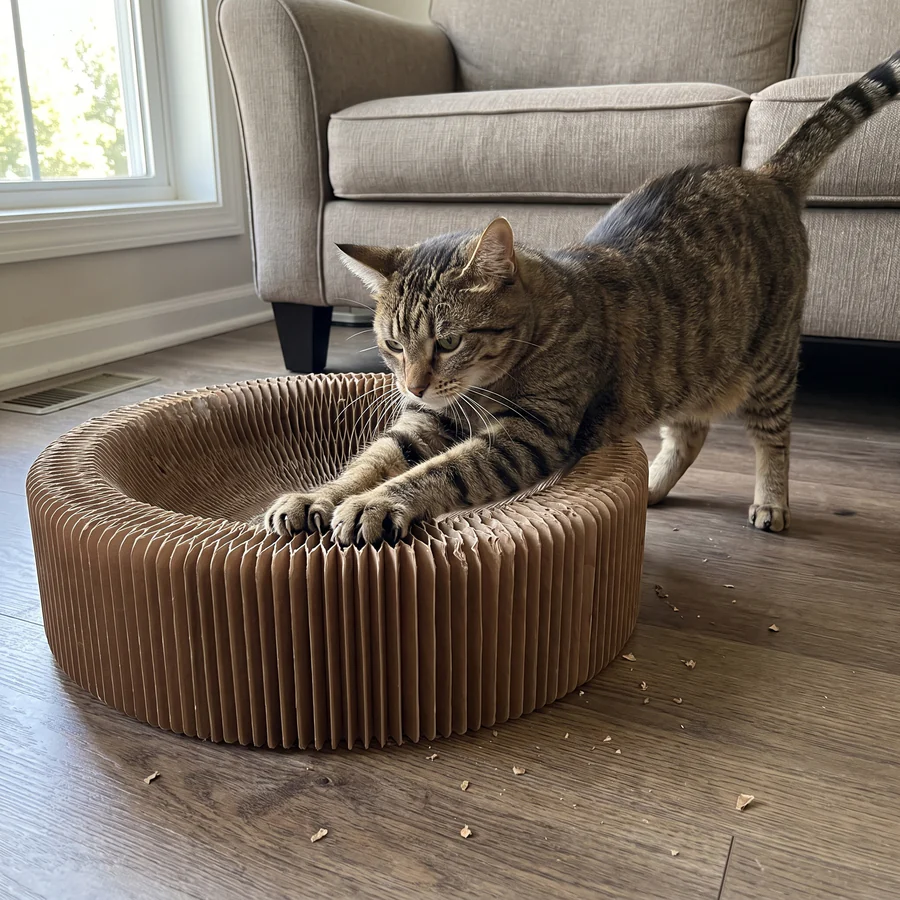
- Scratcher: stable, and offered from the first day so the habit forms before your sofa is discovered.
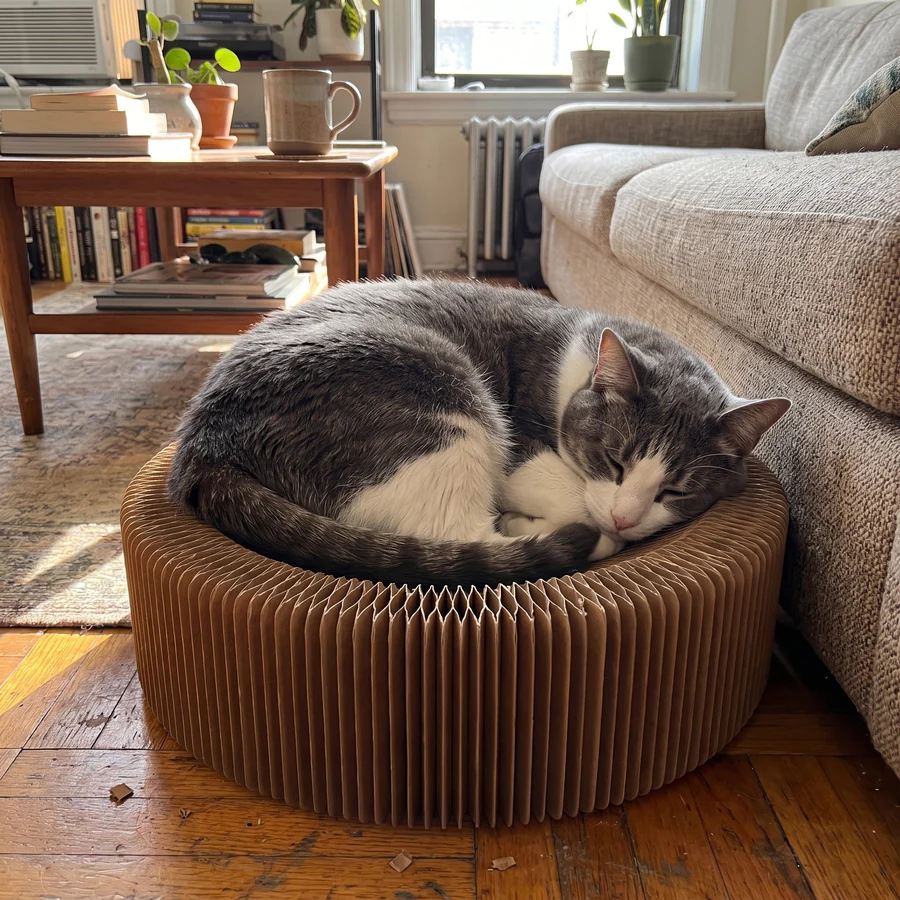
- Bed and hiding spot: a soft bed, plus a cardboard box on its side with a blanket in it.
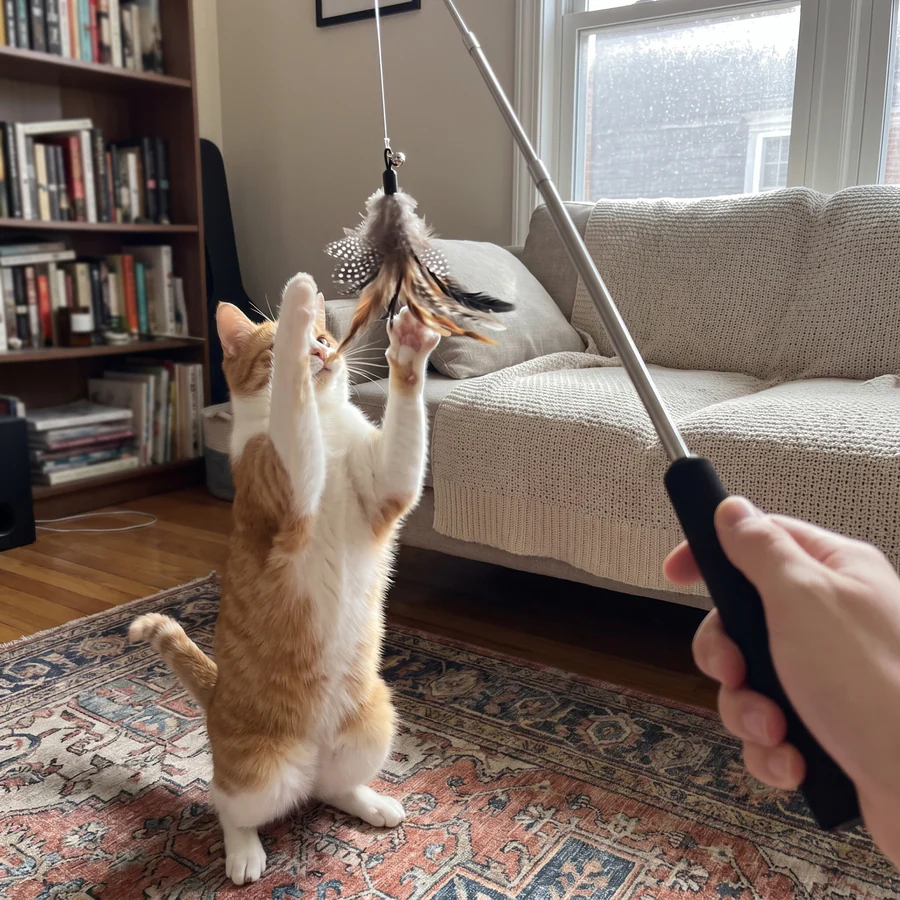
- Toys: a wand toy for playing together and a couple of small toys for solo batting. No yarn, string, ribbon or rubber bands.
- Grooming and ID: a soft brush, nail clippers and a plan for a microchip, even if they will live indoors.
Set up one safe room first
A whole apartment is a lot for a small animal on a big day. Best Friends recommends starting a new cat in a single room with food, water, litter, a scratcher and more than one place to hide, some low and some a little higher. Keep the litter box well away from the food and water.
Spend time in the room, sit on the floor and let the kitten come to you. Coax with a toy or a meal, never by pulling them out of a hiding place. When they are eating, using the litter box and strolling around with their tail up, open the door and let them expand their territory at their own pace. That can take a few days or a couple of weeks.
Kitten-proof before they arrive
Kittens explore with their mouths and climb whatever holds still. Get down to their eye level and look for trouble.
- Tie up blind cords and put away charging cables, hair ties, thread and dental floss. Swallowed string can mean surgery.
- Remove lilies from your home entirely. Every part of the plant, including the pollen and the vase water, can cause kidney failure in cats.
- Check that window screens are snug and sturdy. The ASPCA warns that child safety bars will not stop a cat, who can slip straight through.
- Store medications, cleaning products and human food behind closed doors.
- Steady anything tall and tippy that a climbing kitten could bring down.
Book the vet for the first week
Make the appointment before the kitten comes home. Your vet will check them over, set the vaccine schedule, deal with parasites and talk through microchipping and spay or neuter timing, which the ASPCA recommends by five months of age. Between visits, call promptly if your kitten stops eating, vomits, has diarrhea, seems listless, or has runny eyes or sneezing. Kittens are small, so do not wait it out.
Feeding and litter in the first weeks
Kittens do best on small meals spread through the day rather than one big bowl. PetMD suggests four to five small meals for young kittens, measured rather than poured. Keep fresh water down at all times and wash the bowls often.
Scoop the litter box at least once a day and keep it somewhere quiet that a small kitten can always reach. Most cats dislike scented litter, liners and lids, so keep the setup plain.
Teach good habits with play and scratching
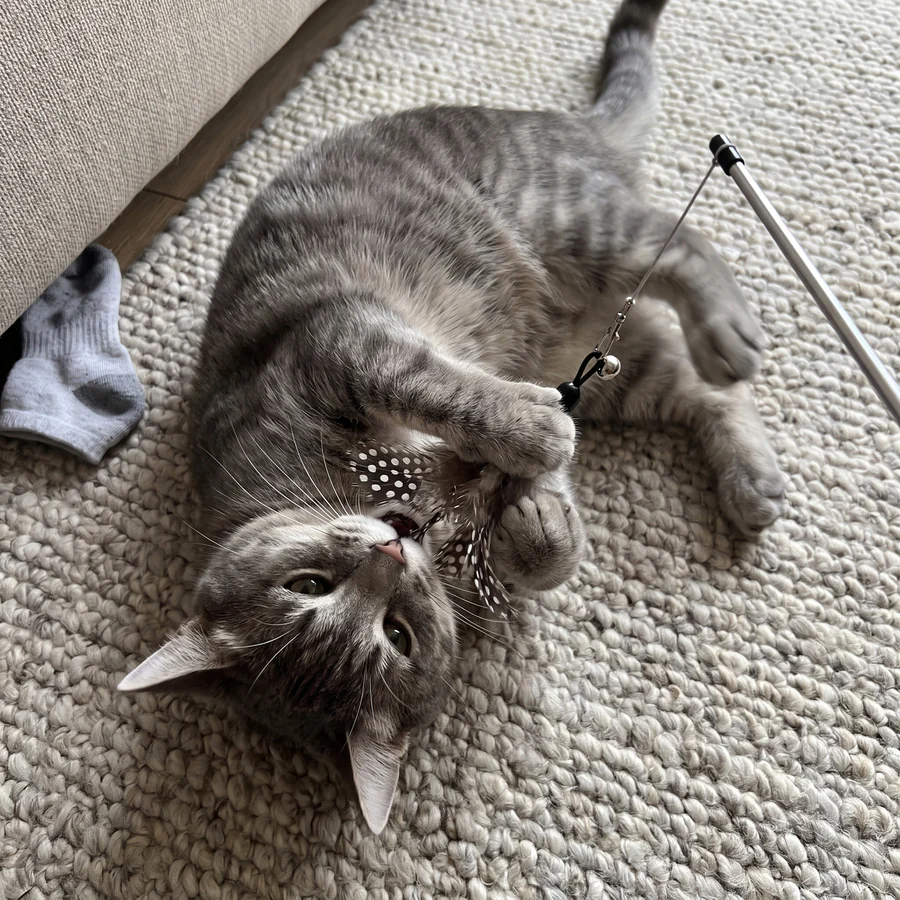
Play with toys, never with your hands or feet. It is funny at ten weeks and painful at ten months, and International Cat Care warns against it for exactly that reason. Kittens play in bursts of a few minutes, tire quickly and come back for more, so aim for several short sessions a day. A feather wand toy lets them stalk, chase and catch at a safe distance from your fingers. Supervise, and put it in a drawer afterward.
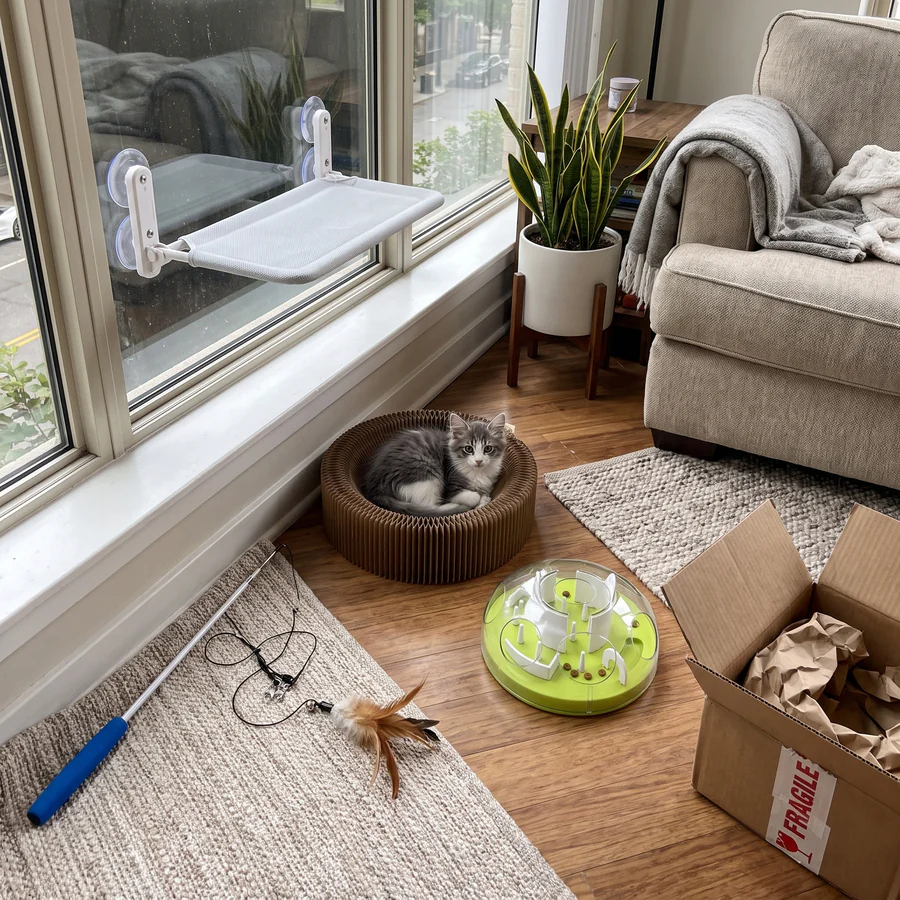
Put a scratcher next to where they sleep, because cats like to scratch when they wake up. Cardboard is easy on small claws, so a cardboard scratcher lounge gives a kitten a bed and a legal scratching surface in one. Our guide on how to stop a cat from scratching furniture covers the rest.
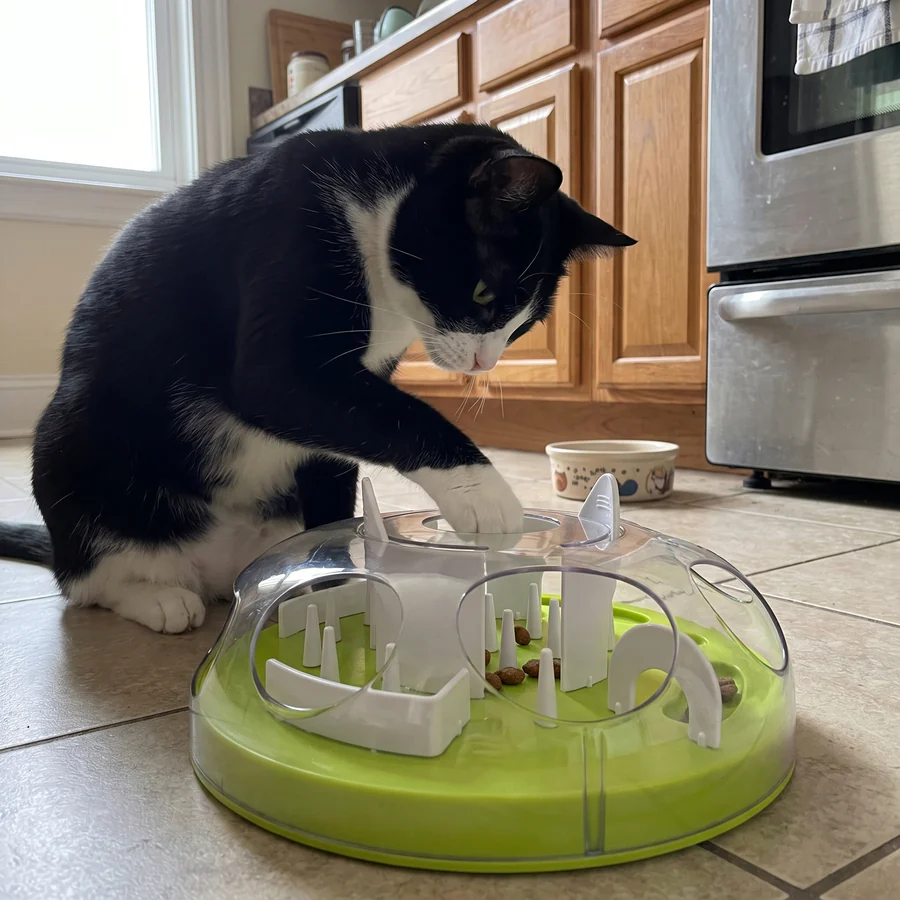
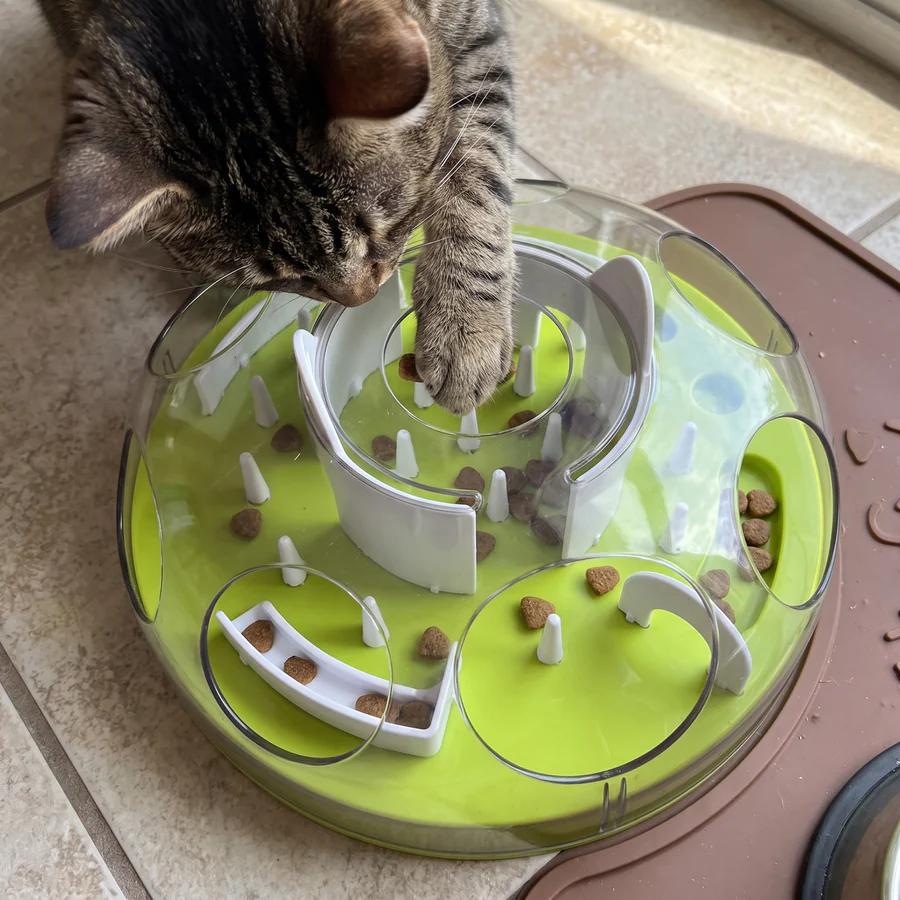
From about 12 weeks, a simple puzzle feeder turns part of a meal into a job. Start easy, with food near the openings, so they win early.
What can wait until they settle in
You do not need a floor-to-ceiling cat tree, a drawer of outfits or thirty toys on day one. A few toys, swapped around every few days, stay more interesting than a pile. Hold off on covered litter boxes and scented anything until you know your cat’s opinions, which they will share.
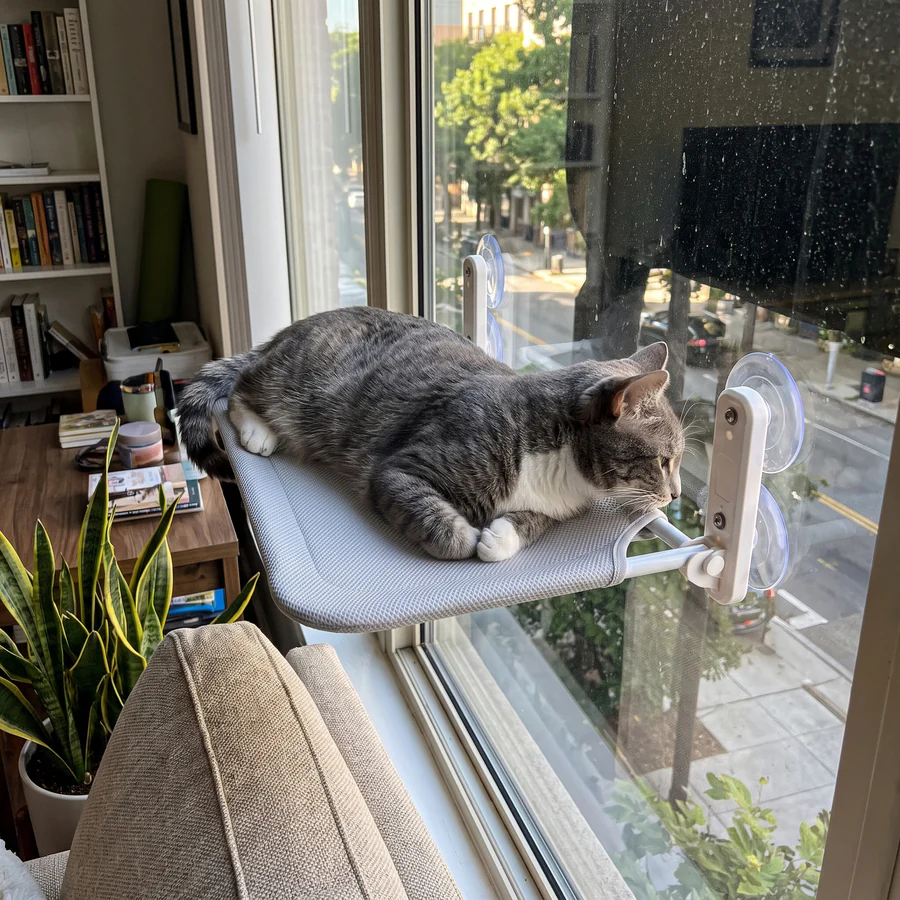
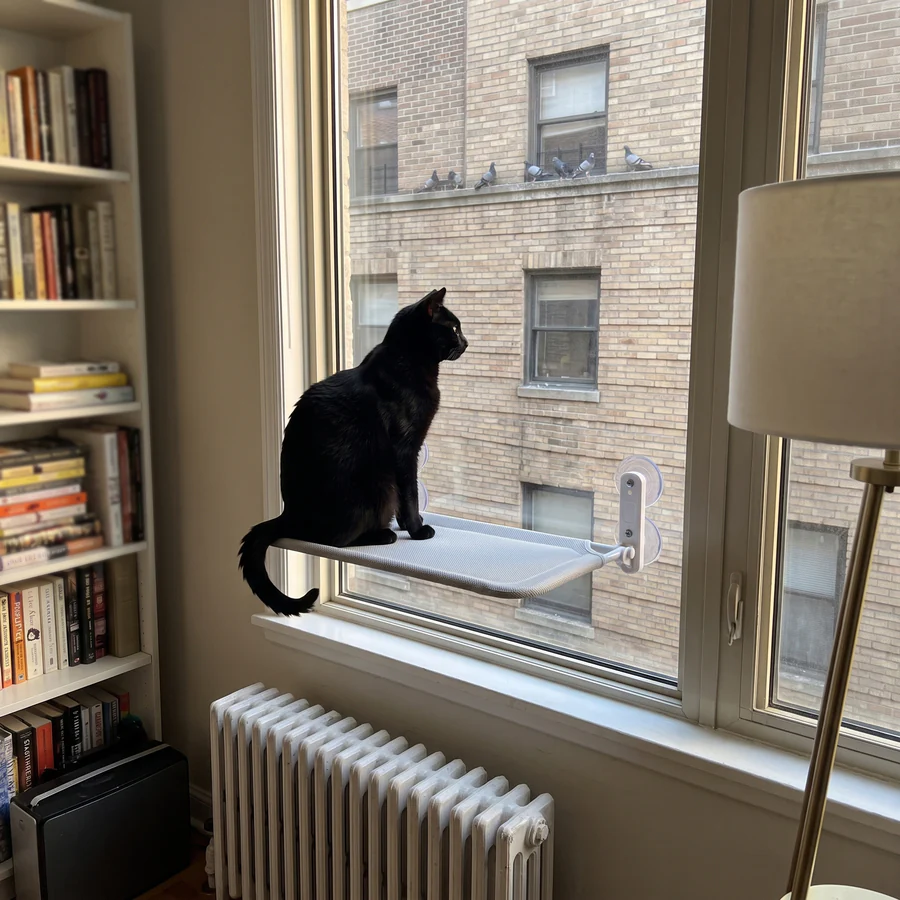
One upgrade worth planning for is a view. Once they are steady on their feet, a cat window perch mounted low on clean, smooth glass gives them the neighborhood to watch. Keep that window closed or securely screened.
If you would rather cover play, scratching, foraging and watching in one go, the New Cat Starter Kit ships free in one box.
Quick answers
Where should a new kitten sleep on the first night?
In their safe room, with a warm bed, a hiding box, water and the litter box within reach. Some crying on the first night or two is normal. Keep things calm and dim, and sit with them for a while if it helps. Once they are settled and the home is kitten-proofed, where they sleep is up to the two of you.
How long should a new kitten stay in one room?
Until they are eating well, using the litter box and walking around confidently, which can take a few days or a couple of weeks. Then open the door and let them explore gradually. Shy kittens need longer, and there is no prize for rushing.
What litter is best for a kitten?
Start with whatever they were using before, because familiarity matters more than brand. Most cats prefer unscented litter with a fine texture. Very young kittens are often started on non-clumping litter, so ask your vet or shelter what suits their age.
Do indoor kittens need a microchip?
Yes. Indoor cats slip through doors, and a collar can come off. The ASPCA suggests a microchip for indoor and outdoor cats alike. Ask your vet to place one at an early visit, and keep your contact details up to date.
When can a kitten start using a puzzle feeder?
International Cat Care suggests introducing simple puzzle feeders from around 12 weeks. Begin with an easy design and food placed where they can reach it quickly, then make it harder as they learn.
General care advice, not veterinary advice. If your cat’s behaviour changes suddenly, or they stop eating, talk to your vet.