Guide · 4 min read
How to stop your cat from scratching the couch (and everything else you own)
You cannot stop a cat from scratching, but you can move it. Put a sturdy scratcher, tall enough for a full stretch, right beside the furniture they are shredding, and cover the damaged spot with double-sided tape or a tight blanket for a few weeks. Reward every scratch that lands in the right place. Skip the spray bottle and never declaw: punishment teaches fear, and declawing is an amputation, not a manicure.
Why cats scratch furniture in the first place
Scratching is maintenance, exercise and communication in one move. It pulls the worn outer layer off each claw, stretches the shoulders and back, and leaves a mark other cats can see and smell, thanks to scent glands in the paws. Your cat is not being spiteful. They are being a cat, in the most visible part of their territory.
Seen that way, a couch is an excellent scratching post: tall, heavy, covered in a grippy weave and parked where everyone spends time. To win, the alternative has to be just as good and just as well placed.
Work out what your cat likes to scratch
Before you buy anything, watch for a day or two. The ASPCA, Cornell’s Feline Health Center and International Cat Care all give the same advice: match the replacement to what your cat already chooses.
- Direction: do they reach up the arm of the sofa, or dig into the rug? Cats who scratch upright need height. Cats who scratch the floor need a flat pad.
- Texture: woven fabric and rope-like surfaces point to sisal. Carpet and cardboard boxes point to corrugated cardboard.
- Timing: many cats scratch right after a nap or when you come home. That tells you where the scratcher should live.
Choose a scratcher that beats the couch
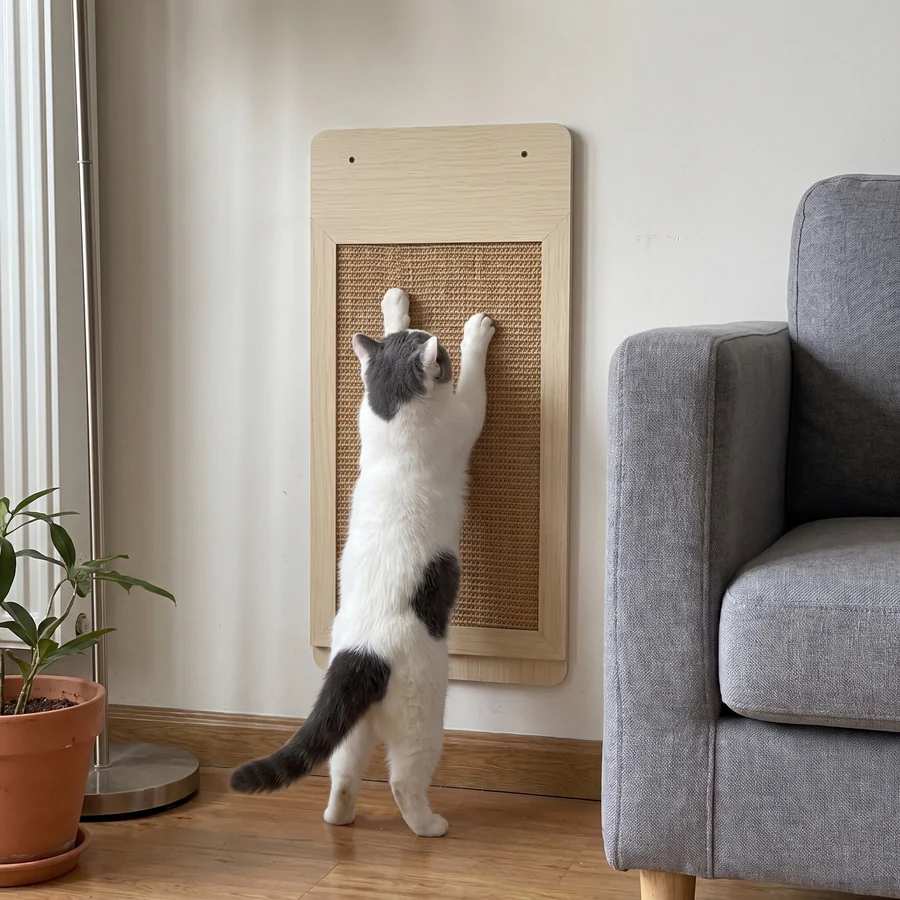
Two things decide whether a scratcher gets used: it must not move, and it must be tall enough. A post that wobbles once gets abandoned. For height, International Cat Care says a post should be as tall as your cat at full stretch on their hind legs. Humane World for Animals, formerly the Humane Society of the United States, puts the minimum at 32 inches.
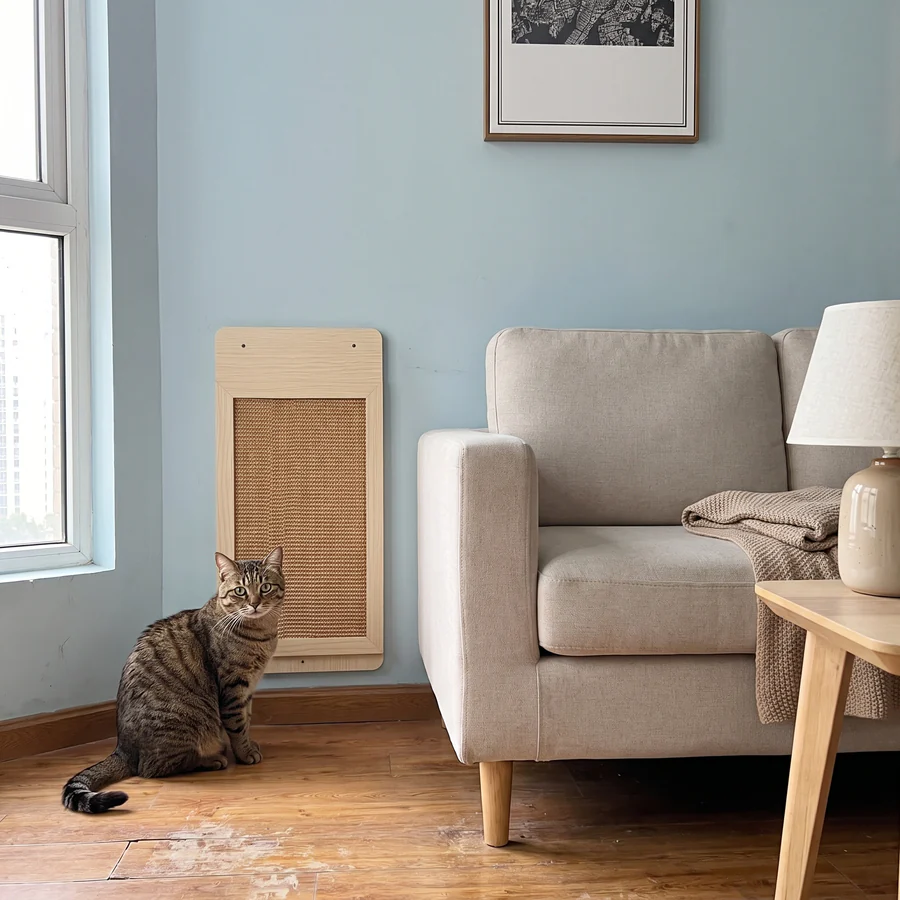
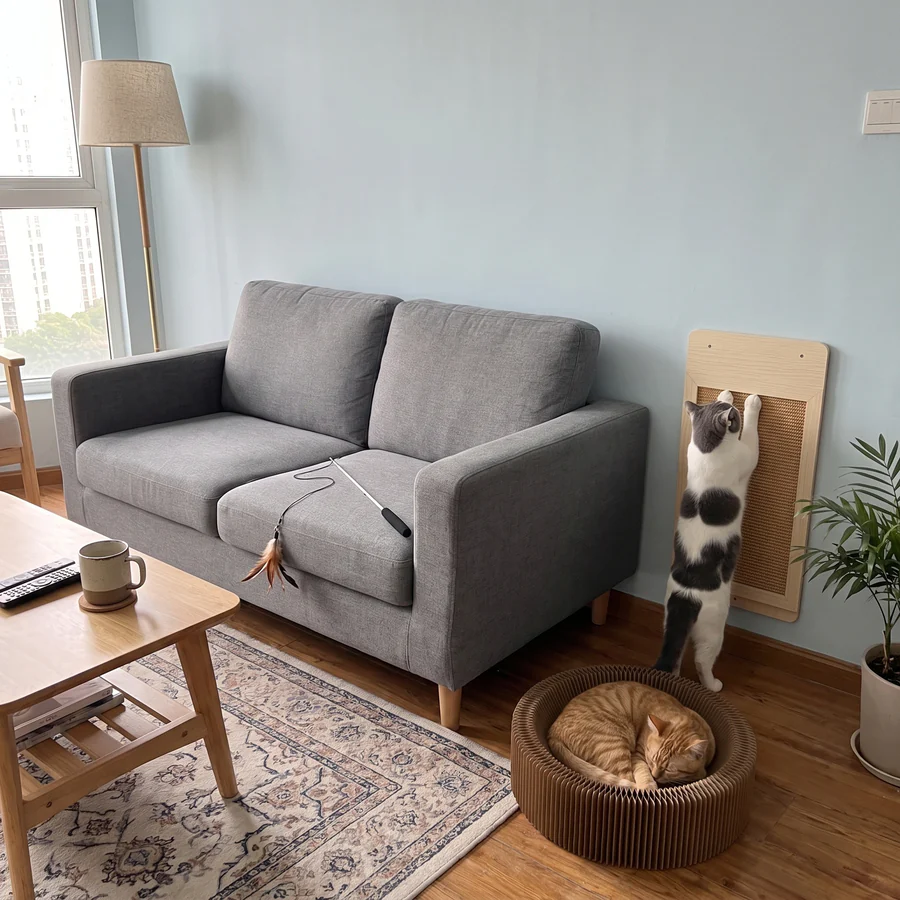
A wall-mounted sisal scratcher solves the wobble problem by borrowing the wall. Ours is about 11 by 23 inches, so hang it raised, with the top edge roughly 32 to 36 inches (80 to 90 cm) from the floor. It mounts with two screws, which are not included because the right ones depend on your wall. No drilling allowed? It also lies flat on the floor.
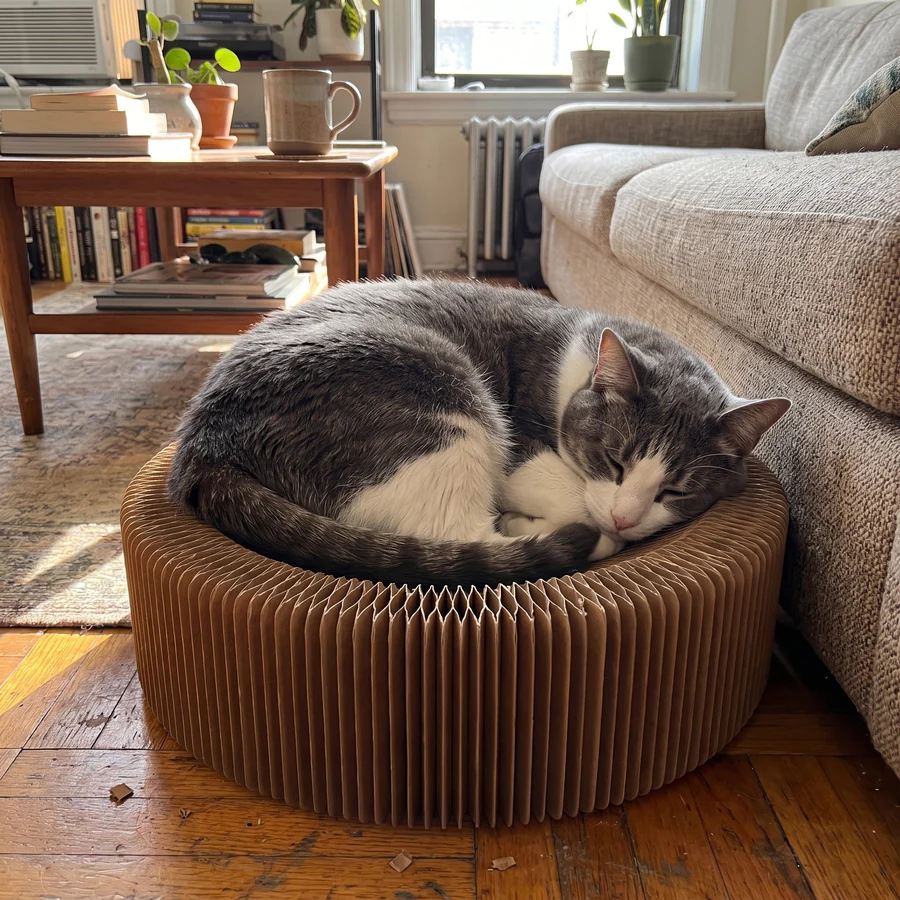
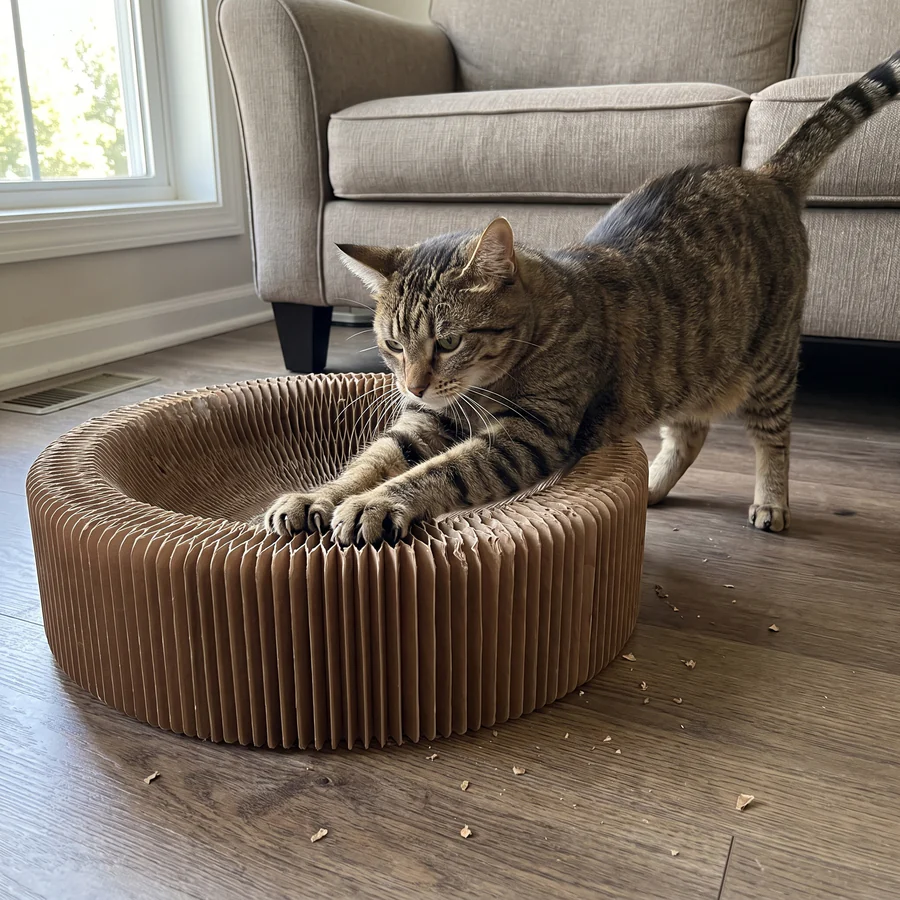
For cats who scratch flat surfaces, or straight after sleeping, a cardboard scratcher lounge doubles as the bed they wake up on. One honest note: well-used cardboard sheds crumbs. A quick vacuum handles it, and crumbs beat shredded upholstery.
Put the scratcher where the damage is
This is the step most people skip. A scratcher in the spare room protects nothing, because scratching is a message and messages go where the audience is. Place the new surface right beside the damaged furniture, close enough to touch. Add a second one near where your cat sleeps.
Once they use it daily, you can shift it a little at a time toward a spot you prefer. In a home with several cats, International Cat Care suggests one scratcher per cat plus a spare, in different places.
Make the couch boring for a few weeks
While the new habit forms, take the fun out of the old target. Double-sided tape, a tightly fitted sheet or blanket, or a plastic cover all work, because claws want a surface that grips back. Keep the covers on until your cat is using the scratcher consistently, then remove them in stages.
Skip scented deterrent sprays. Texture does the job, and strong smells are hard on an animal that lives by their nose.
Reward the right scratch
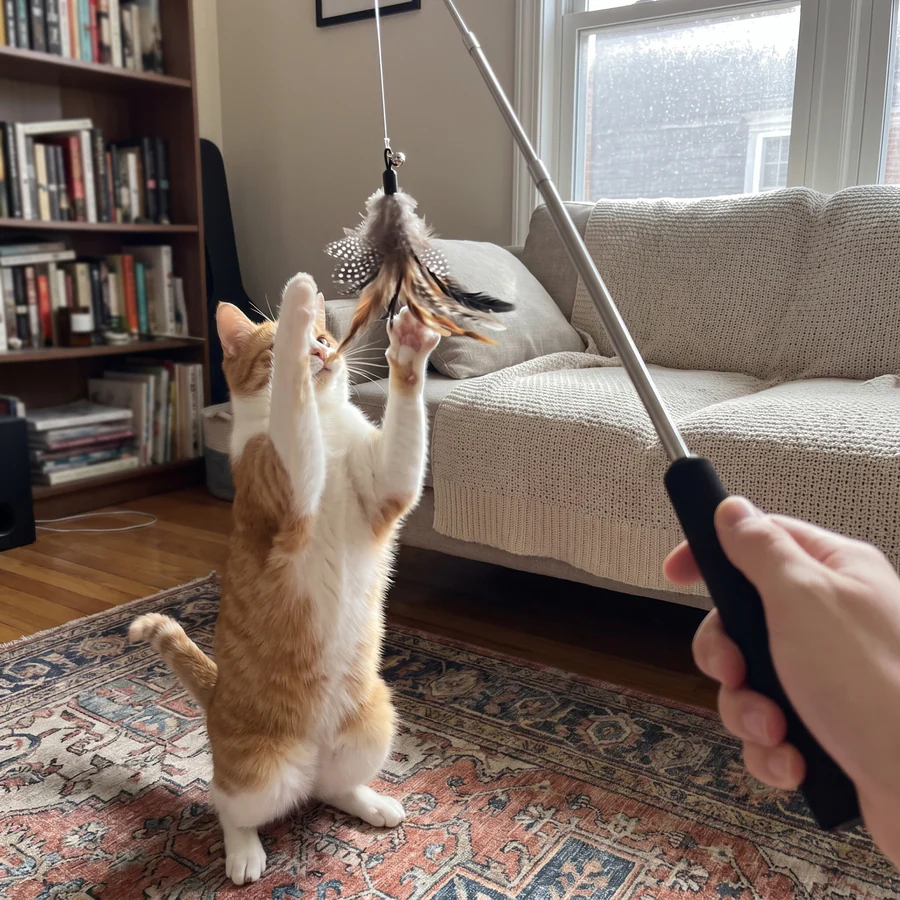
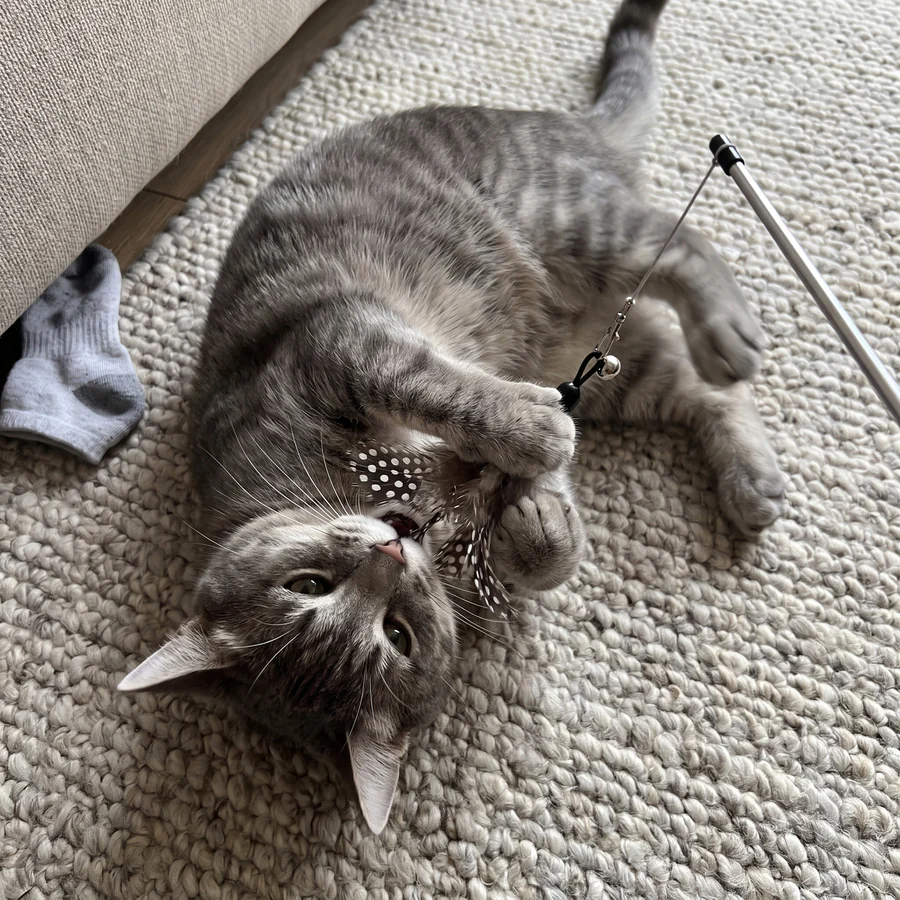
Make the scratcher the best place in the room. Rub in a little catnip, drop a treat at the base and praise them when they use it. Best of all, drag a feather wand toy up and across the surface so their claws sink in mid-pounce. Supervise wand play and put the wand away afterward. String and unattended cats do not mix.
Never press their paws onto the post. It feels like being grabbed, and it teaches them to avoid the thing you want them to love. And do not replace a scratcher just because it looks wrecked. Cats prefer them shredded.
What not to do: punishment, spray bottles and declawing
Yelling and water sprays do not teach a cat where to scratch. Cornell’s behavior advice is blunt on this: a cat does not connect the punishment with the scratching, so all they learn is to be wary of you and to scratch when you are out.
Declawing is not a fix either. It amputates the end bone of each toe, and the ASPCA strongly opposes it. Trimming the claw tips every two to three weeks limits damage while training takes hold, and soft nail caps are an option for cats who tolerate paw handling.
Scratching that suddenly spreads around the home, especially near doors and windows, can signal stress rather than claw care: a strange cat outside, a change at home, tension between pets. If it appears out of nowhere or comes with other behavior changes, talk to your vet or a qualified feline behaviorist.
The sofa-saving setup, in short
Tall and steady, beside the damage, with the couch made dull and the right scratch rewarded. If you want the tools in one go, the Save My Sofa Kit packs the sisal panel, the cardboard lounge and the wand set into one box that ships free. Not sure what your cat prefers? The free 2-minute cat personality quiz matches products to your cat.
Quick answers
Does double-sided tape stop cats scratching?
It helps, as a temporary deterrent. Cats dislike sticky surfaces under their paws, and the ASPCA lists double-sided tape among its recommended furniture covers. It only works if there is a good scratcher right beside the taped spot, so your cat has somewhere better to go. Take the tape off in stages once the scratcher is in daily use.
Why does my cat scratch the couch when they have a scratching post?
Usually because the post loses on one of four points: it is too short for a full stretch, it wobbles, it has the wrong texture, or it is in the wrong room. Fix those and most cats switch. A post next to the couch beats a better post down the hall.
Should I declaw my cat to protect my furniture?
No. Declawing amputates the last bone of each toe, carries surgical risks and does not remove the urge to scratch. The ASPCA and Humane World for Animals both oppose it. Good scratchers in the right places, furniture covers and regular nail trims protect a sofa without surgery.
Do nail caps or nail trims stop scratching damage?
They reduce the damage, not the behavior. Trimming the sharp tips every two to three weeks makes each scratch less destructive, and soft nail caps blunt the claws for cats who tolerate them. Your cat still needs a proper place to scratch.
How long does it take to train a cat to use a scratcher?
It varies by cat, but think in weeks rather than days. Keep the furniture covered until the scratcher is used consistently, keep rewarding the right choice, and avoid moving the scratcher until the habit is solid.
General care advice, not veterinary advice. If your cat’s behaviour changes suddenly, or they stop eating, talk to your vet.