Guide · 4 min read
How to keep an indoor cat happy and entertained, even while you’re at work
An indoor cat stays happy when every day includes the things cats are built to do: hunt, work for food, climb, watch, scratch and retreat somewhere safe. In practice that means two or three short play sessions with a wand toy, part of their food served in a puzzle feeder, a window seat, and a few toys rotated rather than left in a pile. Do the interactive play morning and evening, and set up the solo activities before you leave for work.
Bored cat symptoms, and when it is not boredom
A cat with nothing to do finds something to do. Common signs are extra meowing, pestering you for attention, knocking things off shelves, ambushing ankles, scratching in new places, racing around at night, overeating, or sleeping even more than usual.
Here is the catch: many of those signs overlap with illness or stress. Over-grooming, a sudden change in appetite, avoiding the litter box, or any behavior that changes abruptly belongs with your vet first. Enrichment fixes boredom. It does not fix a thyroid, a sore tooth or a bladder problem.
Play like prey, in short bursts
Cats are sprinters. International Cat Care describes play as a rehearsal of the hunting sequence: search, stalk, chase, pounce, catch and finish off. A toy that allows all of it beats one that only allows the chase. PetMD’s guidance is two or three sessions of 10 to 15 minutes a day, and several short bursts work better than one long one.
Move the lure like something edible: along the floor, behind a chair leg, pausing, then darting away. Let them catch it often. End by slowing down, then offer a meal or a treat so the hunt finishes the way hunts are supposed to. If you use a laser pointer, finish on a toy they can actually grab. Wand toys go in a drawer afterward, because unsupervised string is a hazard.
Make them work for food
A bowl takes thirty seconds. A hunt takes all day. Puzzle feeders close some of that gap, and International Cat Care lists real benefits: more activity, less stress and help with weight. The AAFP and ISFM guidelines on cats’ environmental needs also treat play and predatory behavior, including feeding devices that take effort, as a core need rather than a bonus.
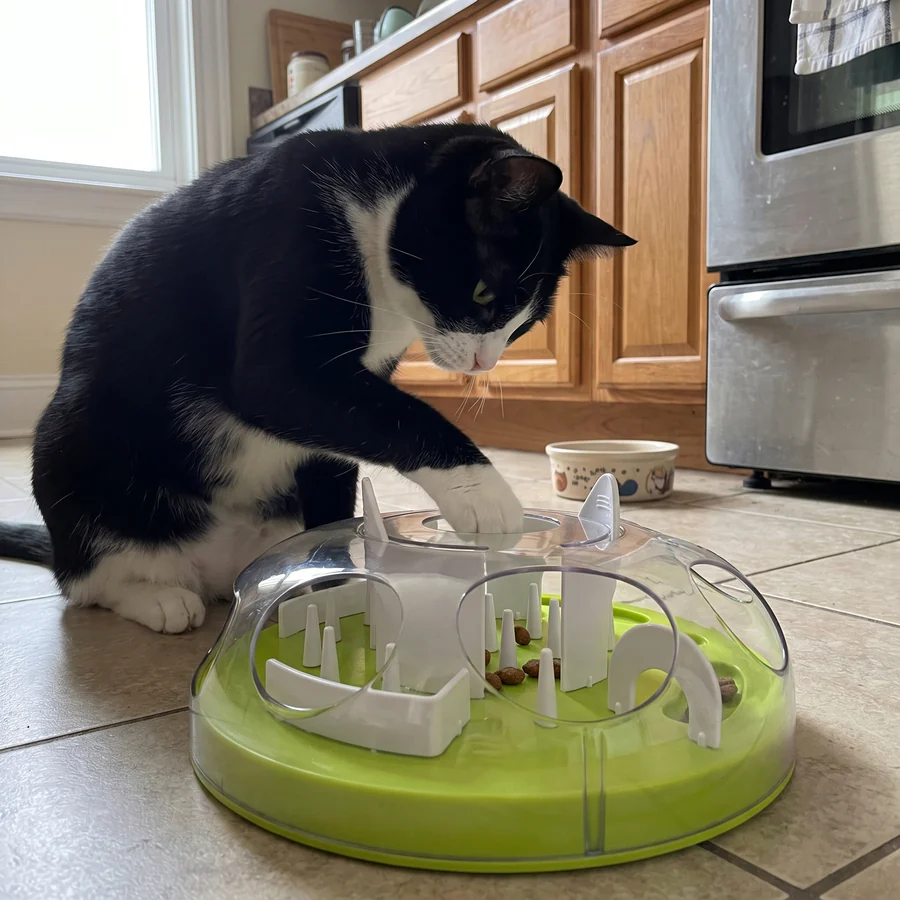
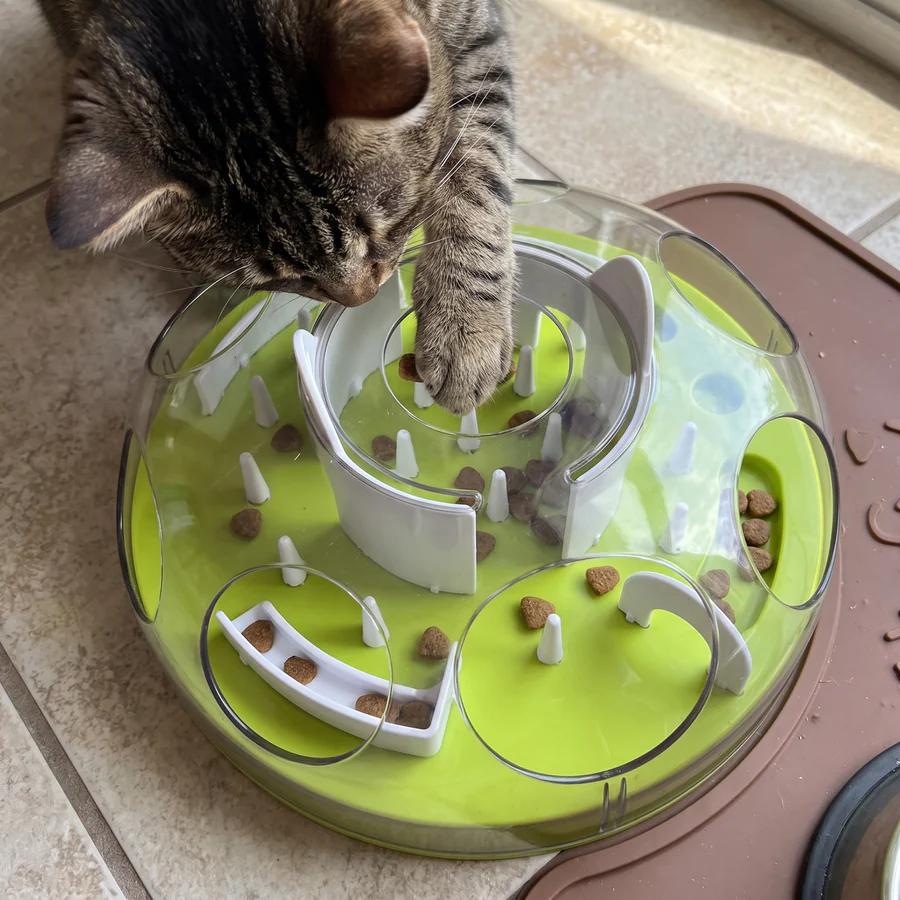
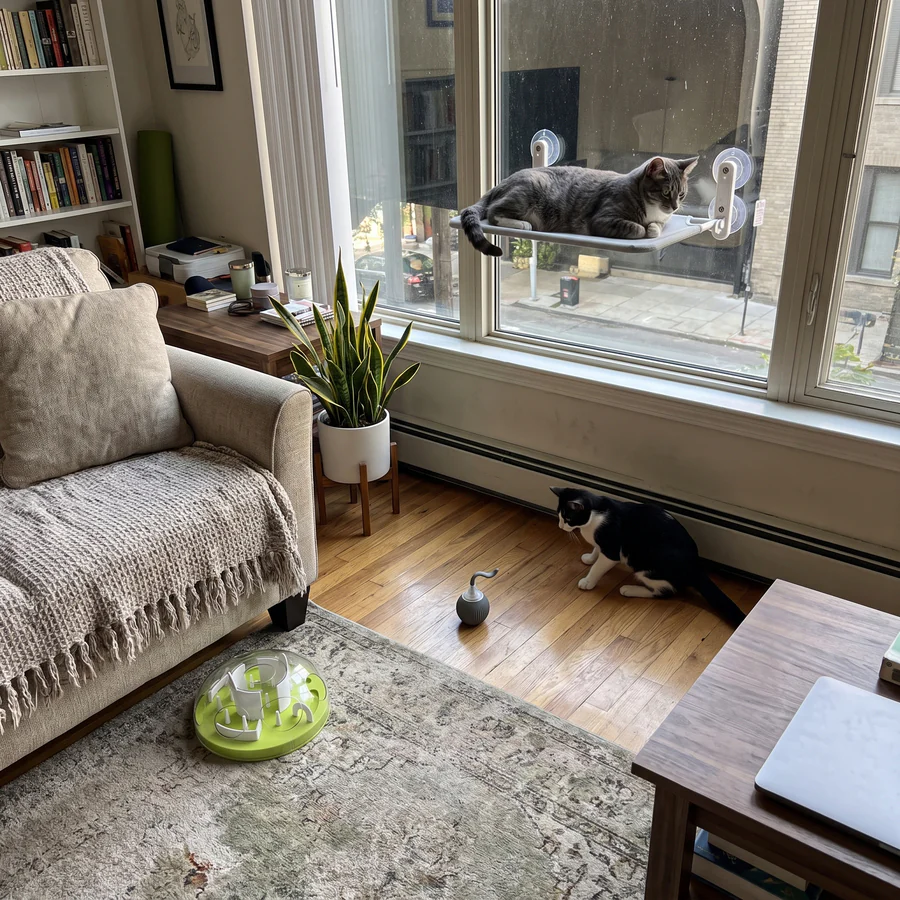
Use part of the normal daily ration, not extra calories. Start easy so your cat wins quickly, then make it harder. A cat puzzle feeder like The Forage Puzzle holds dry kibble or treats in a round maze that they fish through with their paws. You can also split meals into small portions and hide a few around the room.
Give them a window and some height
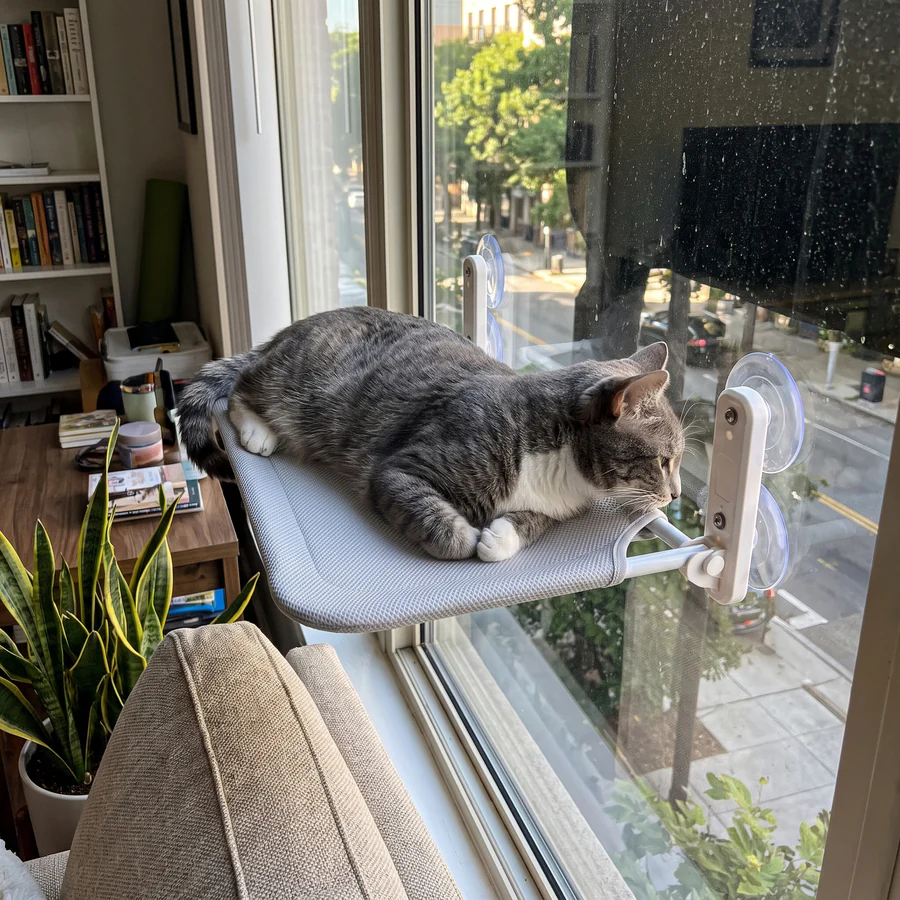
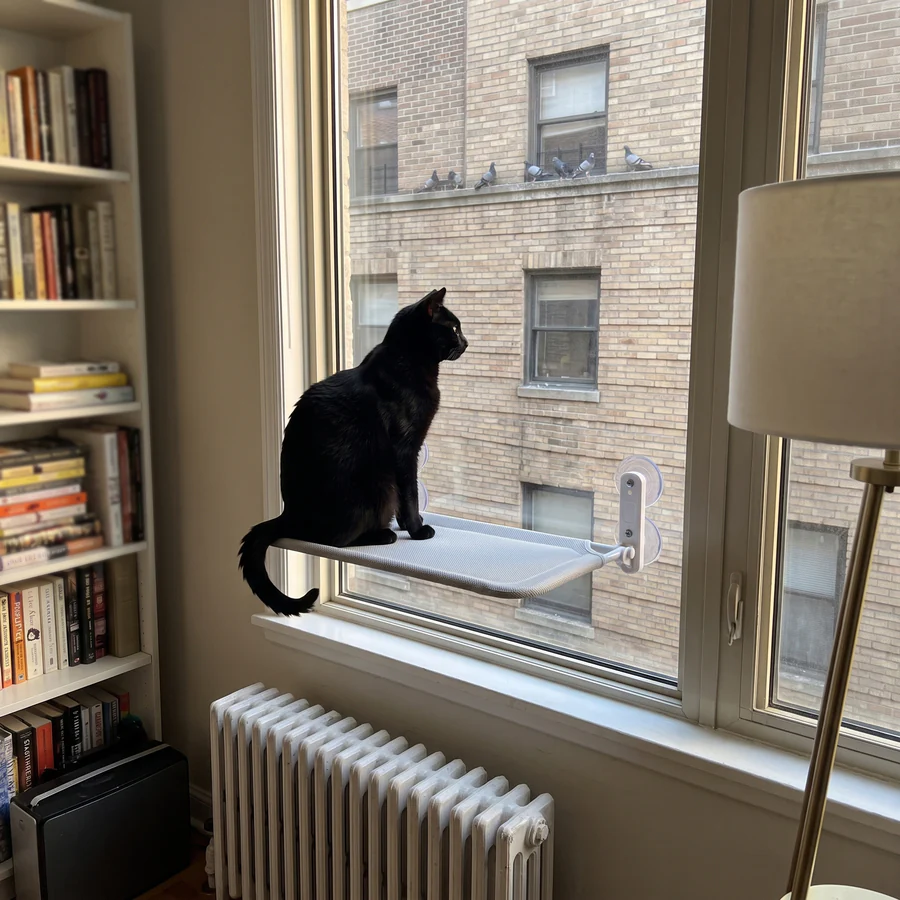
A window is live television with better plots. A seat at window height gives an indoor cat birds, weather, neighbors and sun, and cats feel safer with some height under them. A cat window perch such as The Lookout holds onto clean, smooth glass with four large suction cups, needs no drilling and folds up flat. Press the cups firmly and check them every week. The maker publishes no tested weight limit, so we will not quote one. It suits an average adult cat, and if yours is large, ask us first.
Keep any window that opens securely screened. If you can hang a bird feeder within view, the programming improves.
How to keep a cat entertained while you are at work
Most cats sleep through much of the workday, so you are filling a few waking windows, not eight hours. Before you leave, play for ten minutes, then serve breakfast in the puzzle feeder. Open the curtains by their perch. Leave out two or three solo toys and a cardboard box to investigate.
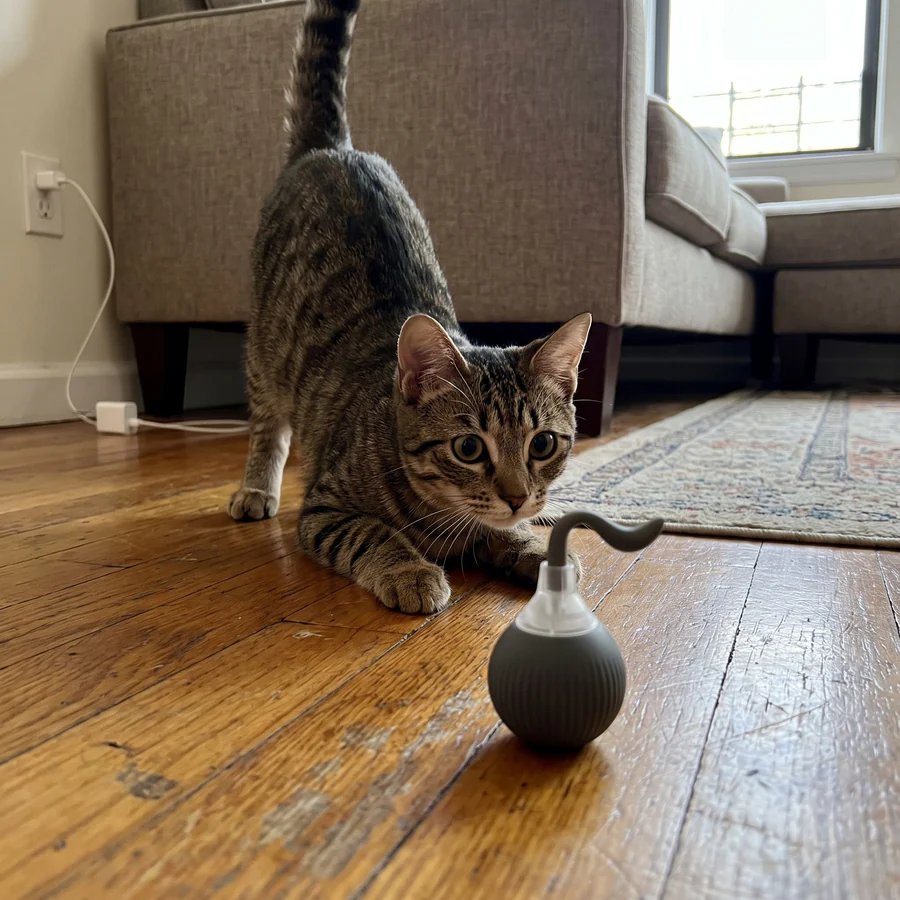
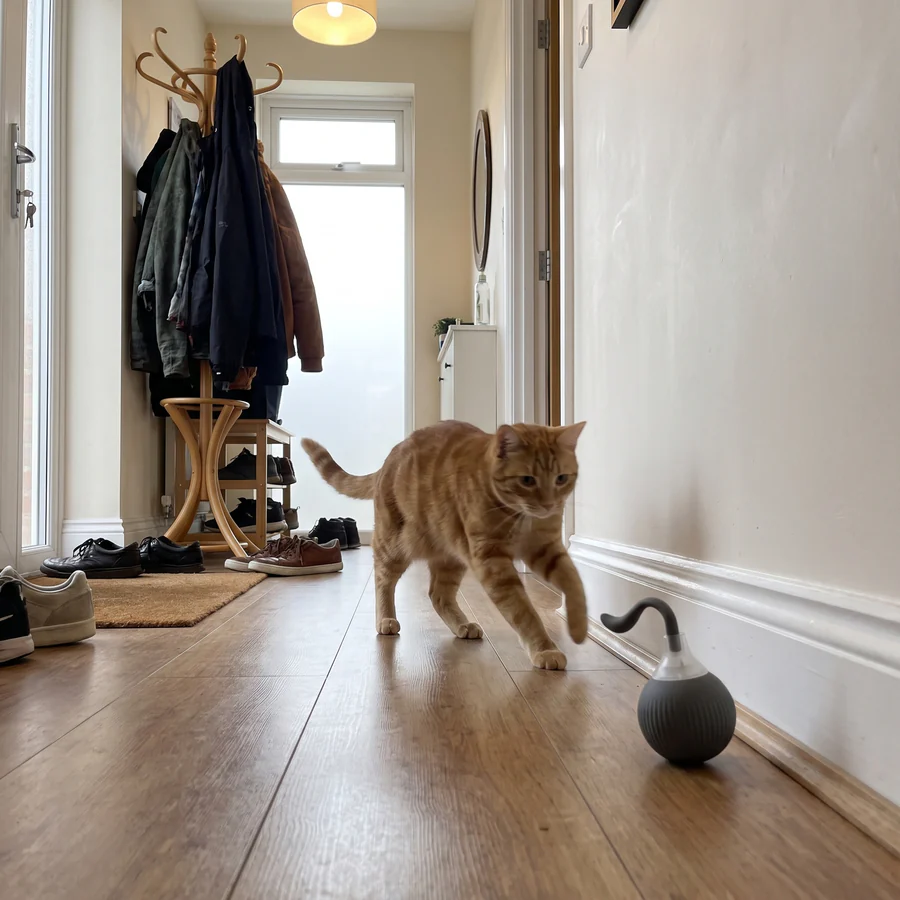
A toy that moves without you helps here. Ground Prey is a small self-rolling ball with a wiggly silicone tail. In touch-to-play mode it waits until your cat pats it, sleeps after five idle minutes, and wakes once about two hours later for a surprise round. It is at its best on hard floors and low-pile rugs. Watch the first few sessions, and check the tail for wear now and then.
Rotate toys instead of buying more
Novelty wears off fast. International Cat Care suggests keeping a few small toys and offering one at a time, and the Indoor Pet Initiative at Ohio State University recommends rotating a batch so that old toys feel new again. Put most of them away and swap every few days. A box, a scratcher in a new position, or a blanket that smells of somewhere else all count as news.
A daily routine for a happy indoor cat
Cats like a predictable day. This one costs you about half an hour.
- Morning: ten minutes of wand play, then breakfast in the puzzle feeder.
- Daytime: window perch, one or two solo toys, a self-rolling ball, long naps.
- Evening: a second play session, dinner, then quiet company on the sofa.
- Before bed: a last short hunt and a small final meal. If nights are the problem, see our guide to cat zoomies at night.
Where to start
Pick one thing from each column: something to chase, something to solve, somewhere to watch from. That is what the Bored Cat Kit packs into one box that ships free: the rolling ball, the puzzle feeder and the window perch. For a plan matched to your cat’s character, take the free 2-minute cat personality quiz.
Quick answers
Do indoor cats get bored?
Yes. A home is safe but predictable, and a cat’s brain and body are built for hunting. Without outlets, that energy comes out as nighttime racing, attention seeking, overeating or destructive habits. Daily play, food puzzles and a view of the outside prevent most of it.
Is it cruel to keep a cat indoors all the time?
No, as long as the home meets their needs. The ASPCA advises keeping cats indoors, where they are safe from traffic, predators and disease. The trade-off is that you have to supply the hunting, climbing and watching that the outdoors would have provided.
Should I get a second cat so my cat is not lonely?
Not as a first fix. Some cats enjoy company, others find a newcomer stressful, and every resource has to be doubled and spread out. Improve play and enrichment first. If you still want a second cat, plan a slow introduction and ask your vet or shelter for help choosing a good match.
How many toys does an indoor cat need?
Fewer than you think, used better. A wand toy for playing together, a handful of small solo toys in rotation, one puzzle feeder and a scratcher cover most cats. Swap the solo toys every few days so they stay interesting.
General care advice, not veterinary advice. If your cat’s behaviour changes suddenly, or they stop eating, talk to your vet.