Guide · 4 min read
How to keep a cat happy in a small apartment (yes, even a studio)
Cats do not measure a home in square feet. They measure it in places to climb, watch, scratch, hide and hunt. A small or studio apartment works well if you build upward, claim a window, keep food, water and litter apart from each other, give your cat one hiding place that is theirs alone, and play with them every day. A small, interesting apartment suits a cat better than a large, empty one.
Can a cat be happy in a studio apartment?
Yes. The AAFP and ISFM guidelines on cats’ environmental needs are built around five things, and floor area is not one of them. They are a safe place to retreat to, key resources kept separate from one another, chances to play and hunt, predictable and friendly human contact, and respect for the cat’s sense of smell. Every one of those fits in 400 square feet.
What small homes lack is slack. In a house, a badly placed litter box or a dull afternoon gets absorbed. In a studio, layout is everything, so it is worth ten minutes of thought.
Think in layers, not floor space
Cats use height the way we use extra rooms. Clear the top of a bookcase, leave a shelf free, or put a folded blanket on a sturdy cabinet, and the apartment gains a floor. Make sure there is a route up: chair to desk to shelf. Older cats need those steps closer together.
International Cat Care’s advice for small homes follows the same idea: stack resources vertically and choose wall-mounted pieces over floor-standing ones. Anything that folds away when guests arrive is a bonus.
Claim a window
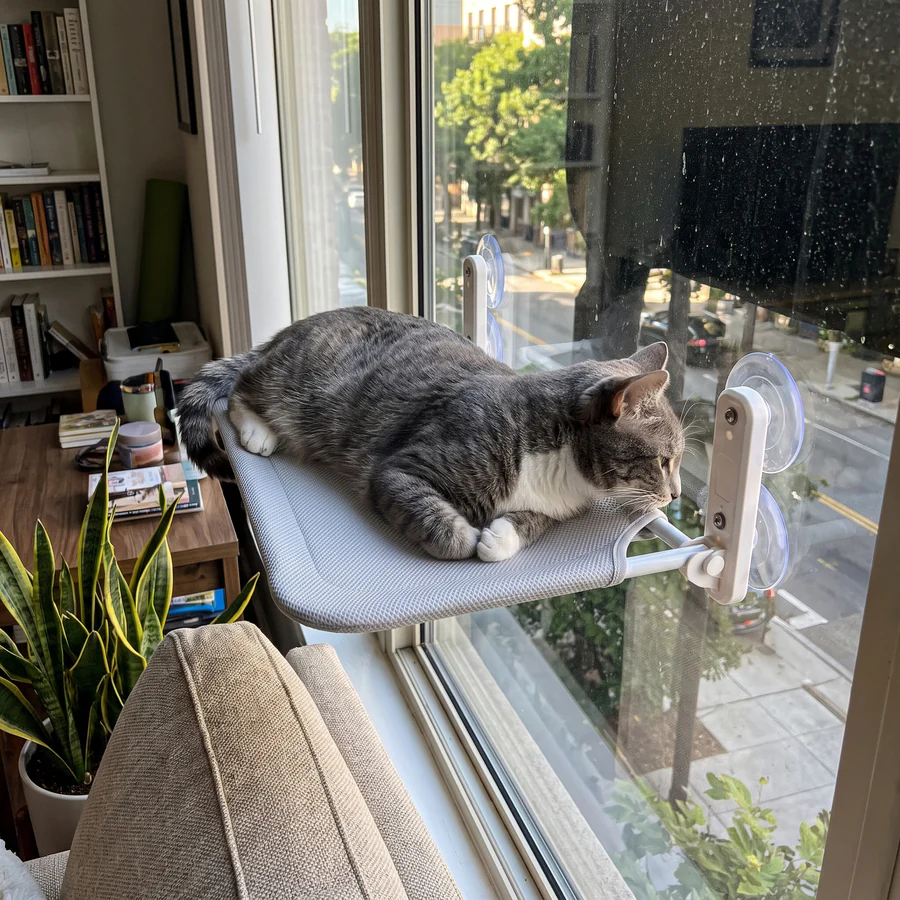
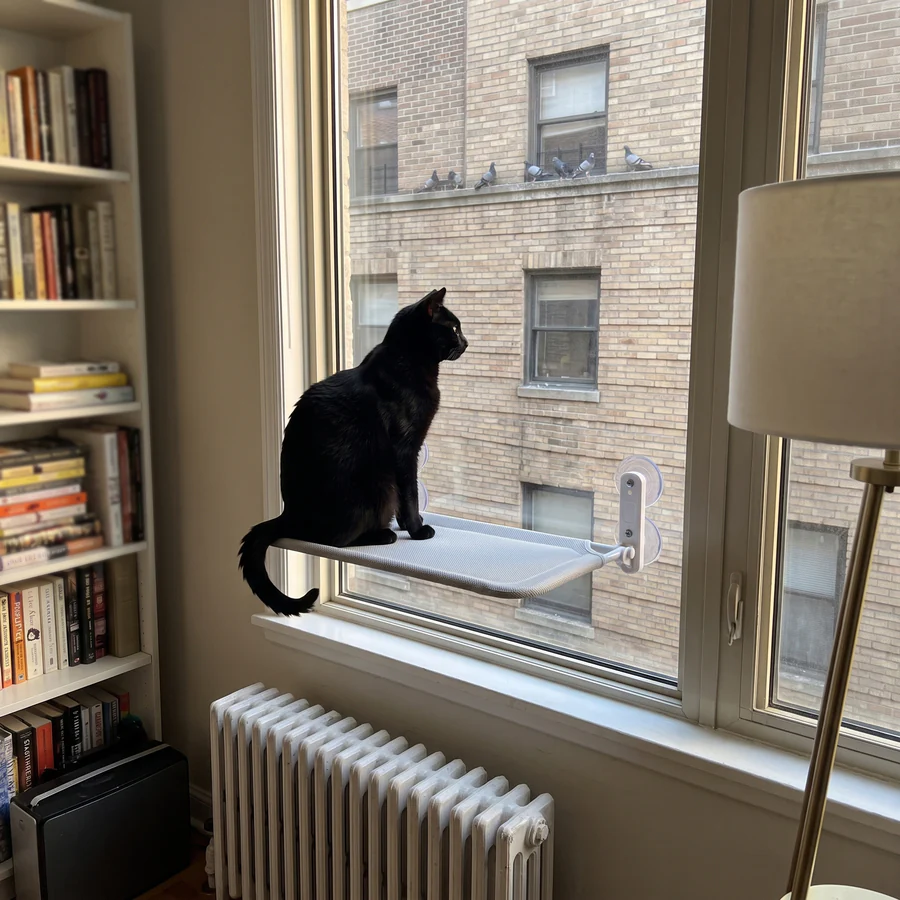
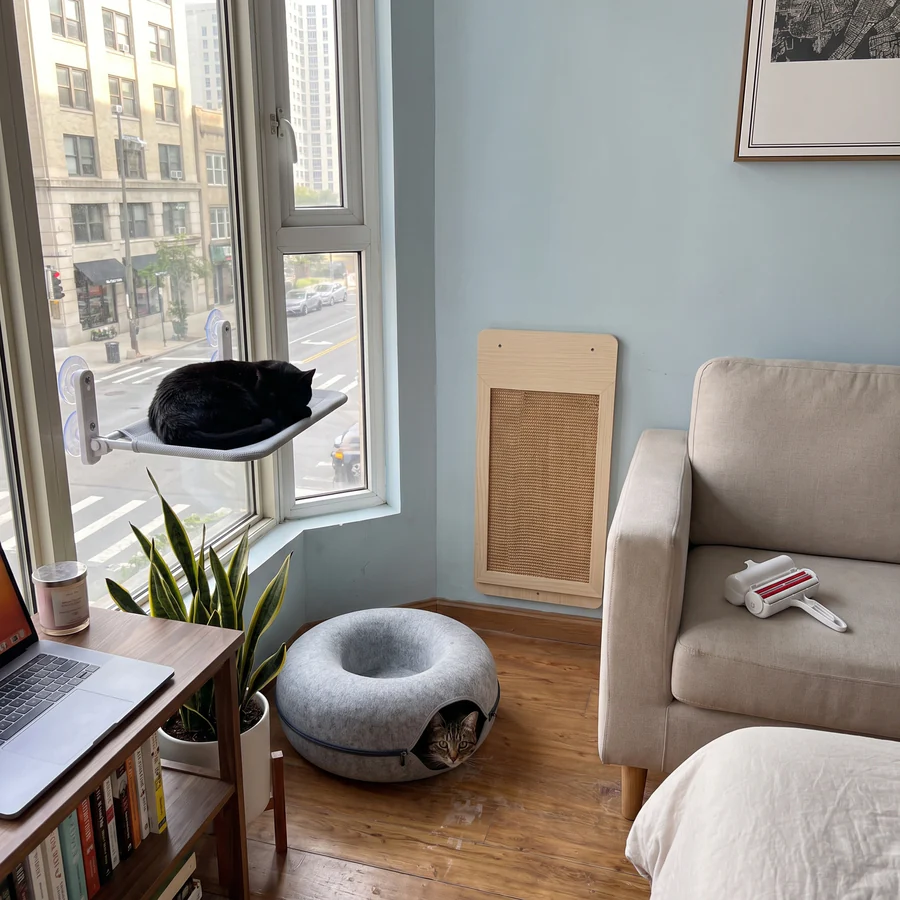
A window is the only part of a small apartment that changes all day. Give your cat a seat at it. If the sill is too narrow, a suction-cup cat window perch adds one without touching the floor plan. The Lookout is a flat gray mesh bed, about 12 by 20 inches, on a stainless steel frame with four large suction cups. There is no drilling, so it suits renters, and it folds up flat.
It needs clean, smooth glass, firm pressure on each cup and a quick check every week. The maker does not publish a tested weight limit, so we will not invent one. It suits an average adult cat, and if yours is large, ask us before ordering. Keep any window that opens securely screened. Our guide on whether cat window perches are safe has the full setup.
Put the scratching post on the wall
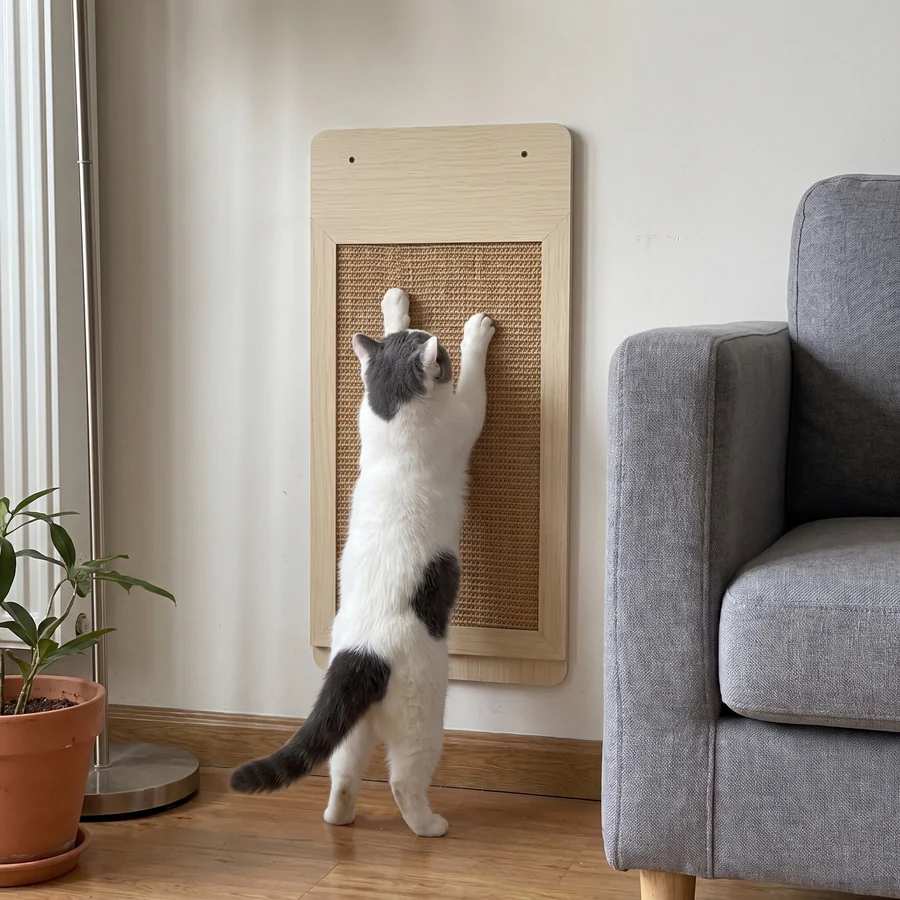
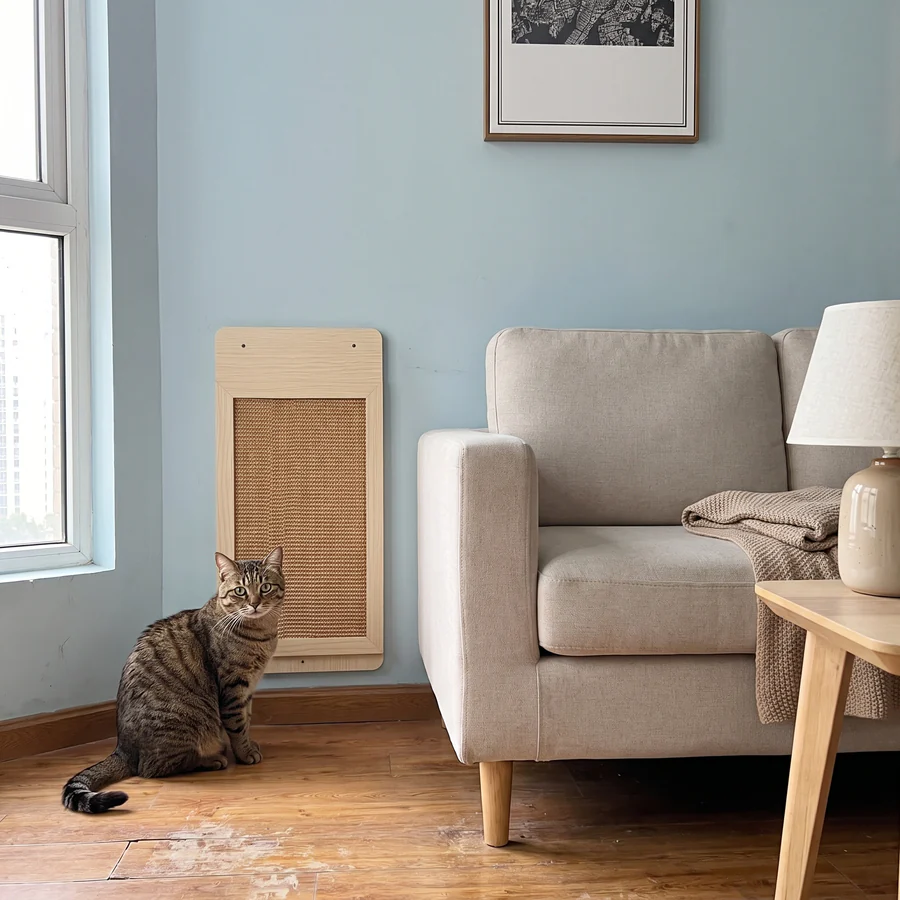
A proper scratching post has to be tall and immovable, which usually means a wide base and a lot of floor. A wall-mounted sisal scratcher gets the same result from the wall. The Territory Panel is about 11 by 23 inches on a solid wood frame. Hang it beside the sofa or near where your cat sleeps, raised so that the top edge is roughly 32 to 36 inches (80 to 90 cm) from the floor, which lets an adult cat stretch fully. It hangs on two screws, and mounting hardware is not included because walls differ. If your lease forbids drilling, lay it flat on the floor instead.
Give them one place to disappear
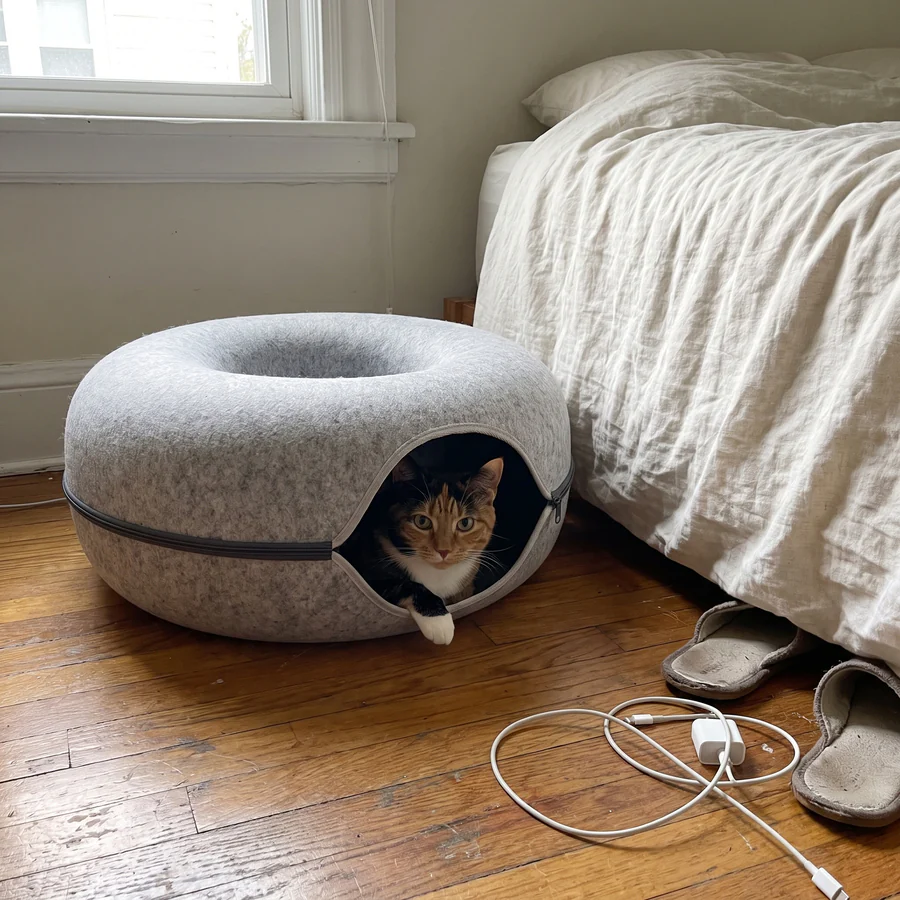
In a studio there is no other room to retreat to, so you have to build one. Feline vets describe a good safe place as private, enclosed at the sides and just big enough for one cat. It matters most when you have visitors, a vacuum cleaner or a bad day.
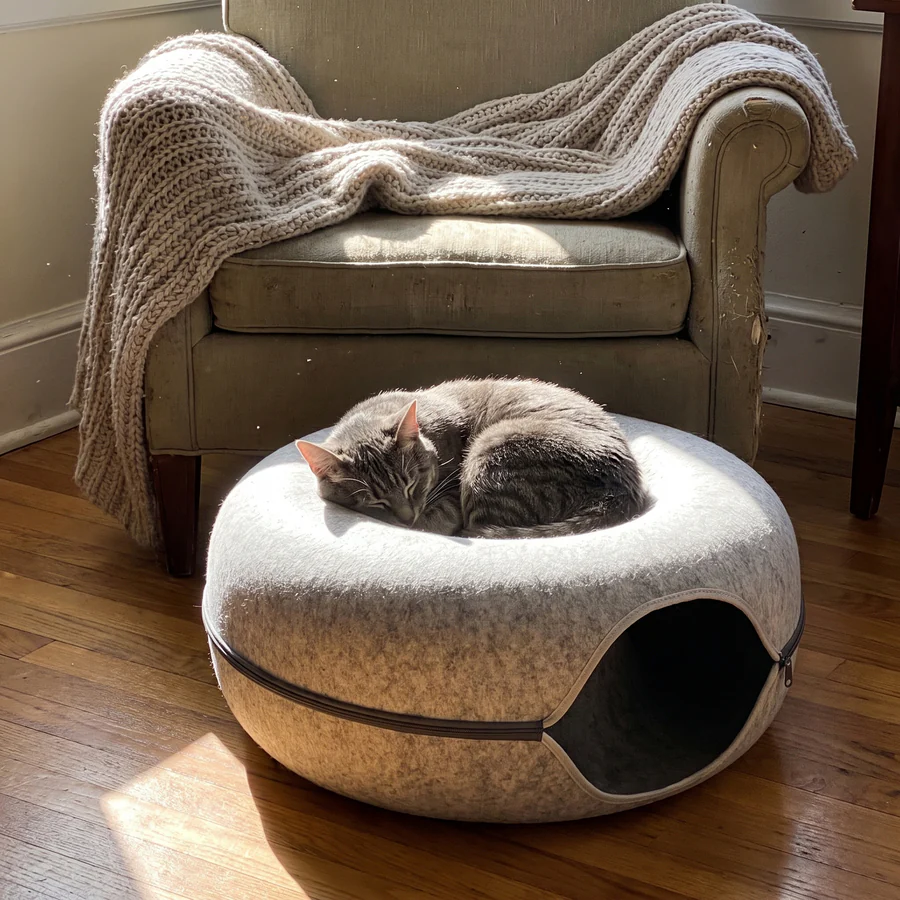
A cardboard box on its side works. So does the gap you make by pulling the sofa a few inches from the wall. For something nicer to look at, a felt cat tunnel bed like The Hideaway is a light gray wool-blend felt donut, about 20 by 20 by 9 inches, that zips together and works as a cave, a tunnel and a bed. It is best for cats up to about 9 lb (4 kg), and it is spot clean only. Whatever you choose, the rule is the same: nobody reaches in.
Keep food, water and litter apart
Cats prefer not to eat next to their toilet, and they like their water away from their food. In a small apartment, apart can mean opposite corners, or different rooms if you have them. Put the litter box somewhere quiet and easy to reach, not beside a washing machine that roars without warning. Scoop at least daily. In a studio, you will want to anyway.
Play every day, because the hallway is short
A small home offers fewer chances to run, so scheduled play carries more weight. Two or three sessions of 10 to 15 minutes with a wand toy, using the full length of the room and the furniture as cover, is enough for most cats. Serve some meals in a puzzle feeder. Rotate toys instead of adding more. There is a full plan in our guide to keeping an indoor cat entertained.
A small-apartment cat setup, in short
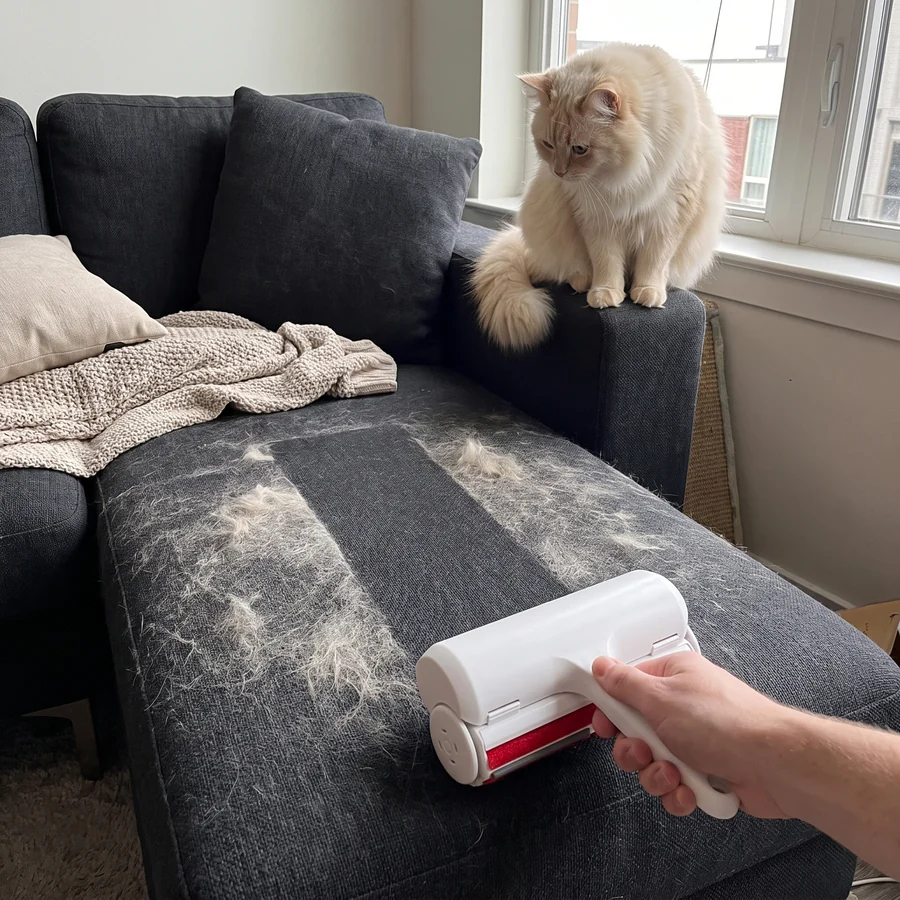
Window seat, wall scratcher, hiding place, daily play. The Apartment Cat Kit bundles the first three, plus a reusable fur roller for the sofa you all share, and ships free in one box.
Quick answers
Is it cruel to keep a cat in a small apartment?
No. Cats care about what a space offers, not how big it is. A small apartment with climbing spots, a window view, a hiding place, clean and well-separated resources and daily play meets a cat’s needs better than a large home with none of those.
How much space does a cat need?
There is no magic number. What matters is usable territory: floor, furniture tops, shelves and windowsills all count. If your cat can climb, watch, hide, scratch and run a few strides during play, the space is doing its job.
What is the best cat furniture for small spaces?
Pieces that use walls and windows instead of floor, and that fold away. A suction-cup window perch, a wall-mounted scratcher and a hideout that doubles as a bed cover the main needs without adding much of a footprint to the room.
Where do you put a litter box in a small apartment?
Somewhere quiet, always accessible and as far from food and water as the layout allows. A bathroom corner works if the door stays open. Avoid spots next to noisy appliances, and do not tuck the box somewhere so awkward that your cat has to think twice about going.
Can I set up a rental for a cat without drilling holes?
Yes. A suction-cup perch needs no screws, a sisal panel can lie flat on the floor instead of hanging, and cardboard or felt pieces just sit where you put them. Good scratchers also protect the carpet and door frames your deposit depends on.
General care advice, not veterinary advice. If your cat’s behaviour changes suddenly, or they stop eating, talk to your vet.